
Heat Pump Tripping? Electrical vs Heating Fault Explained
Heat Pump Tripping the RCD or Breaker? Electrical vs Heating Fault
When a heat pump trips a switch, the first question isn’t what has failed inside the unit. It is who to call. This guide helps you tell an electrical fault (call an electrician) from a heat pump-specific one (call your installer or manufacturer).
Quick answer
Instant trips, other circuits going off, or a device that won’t reset even with the heat pump disconnected point to an electrician. Trips tied to one part of the heating cycle, or a fault code on the unit’s display, point to your heat pump installer or manufacturer.
Why heat pumps can need Type B RCD protection
Many heat pumps use inverter-driven compressors that vary their output rather than switching on and off. Under fault conditions, that kind of equipment can produce smooth DC residual currents that a Type A RCD may not reliably detect. BS 7671 (Reg 531.3.3) requires the RCD type to suit the equipment, so follow the heat pump manufacturer’s installation manual. Where it calls for Type B, a Type A device isn’t suitable.
If a heat pump has started tripping, check first that the RCD type specified for it was actually fitted. A mismatched device can cause nuisance tripping and, in some faults, a genuine protection gap. See What is a Type B RCD? for why this matters for frequency-controlled equipment generally.
Electrical fault or heating system fault? A quick triage
| Sign | Points toward |
|---|---|
| Trips instantly the moment it is switched on | Electrical fault: likely earth leakage in the unit’s wiring or a component failure |
| Also trips other circuits sharing the same RCD | Electrical fault: the RCD protects more than the heat pump, so check what else is on that circuit |
| The breaker or RCD won’t reset and hold, even with the heat pump disconnected | Electrical fault: the protective device itself may have failed |
| Only trips during a specific part of the cycle (defrost, hot water mode) | Heating system: likely how the unit itself is operating, not the electrical supply |
| Shows an error code on the unit’s display when it happens | Heating system: the manufacturer’s error code is the right starting point |
| Runs fine electrically but isn’t heating properly | Heating system: a performance issue, not an electrical trip |
A guide, not a diagnosis
Some faults overlap. A heating-system fault can sometimes look like a hard electrical trip. If you are unsure after working through the table, start with an electrician: they can also confirm the electrical side is fine before you pay for a heating engineer.
If it looks electrical
- Confirm the RCD/RCBO type fitted matches the manufacturer’s requirement (Type B where specified)
- Check whether other circuits share the same protective device
- Check for a labelled SPD (surge protection device) and whether its indicator shows a fault
- Have a qualified electrician test the circuit before assuming the heat pump has failed
Tripping doesn’t automatically mean the heat pump is broken. Often it is the protective device, its type, or the wider circuit that needs attention. The same principle applies in our EV charger tripping guide, which covers how RCD and RCBO faults present.
If it looks heating system-specific
If the pattern points to something in the heat pump’s own operation (a specific cycle, an error code, or a performance problem rather than a clean electrical trip), that is outside what an electrical protection guide can responsibly diagnose. Contact your installer or the manufacturer. They have the unit’s fault codes and service history, which matter far more here than general electrical knowledge.
Frequently asked questions
Why does my heat pump need a different RCD to the rest of my house?
Heat pumps use inverter-driven compressors that can produce fault currents a standard Type A RCD may not reliably detect. BS 7671 (Reg 531.3.3) requires the RCD type to suit the equipment, so follow the manufacturer’s instructions. Where they specify Type B, that is what to fit.
Should I call an electrician or a heating engineer if my heat pump trips?
If it trips instantly on power-up, affects other circuits, or the protective device won’t reset with the heat pump disconnected, start with an electrician. If it only trips during one part of the cycle or shows an error code, a heating engineer or the manufacturer is the better first call. If you can’t tell, an electrician can usually rule the electrical side in or out quickly.
Can the wrong RCD type cause a heat pump to trip unnecessarily?
Yes. A Type A RCD on a circuit that needs Type B can cause nuisance tripping on frequency-controlled equipment, because it isn’t designed to interpret the fault current waveforms that equipment can produce.
Do heat pumps need surge protection as well as the correct RCD?
Surge protection is generally recommended for heat pump installs, as for other significant fixed appliances, to protect the control electronics from voltage spikes. See heat pump electrical protection requirements.
Important
This guide covers general electrical protection principles only and doesn’t diagnose heat pump-specific mechanical or performance faults. Any electrical testing, RCD/RCBO replacement or circuit work must be done by a qualified, registered electrician. For problems with the heat pump’s own operation, contact your installer or the manufacturer.
Related guides
Not sure what your install needs?
Use the Product Finder →-
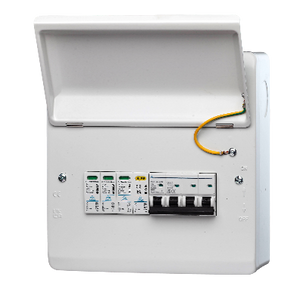
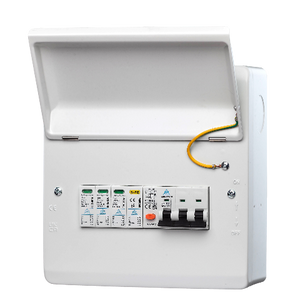
RCBO + Surge Protection – Fitted Consumer Unit IP40 – 3 Phase
Regular price From £65.00Regular price -


3-Phase PME PEN Fault Protection – 40A RCBO + Surge | Single EV Charger | BS7671 Compliant
Regular price From £65.00Regular price -
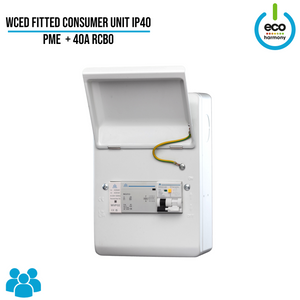
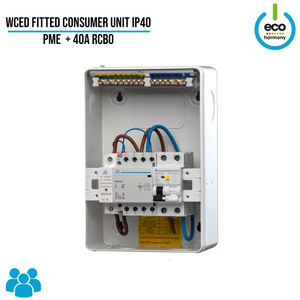
Fitted Consumer Unit IP40 – PME + 40A RCBO (Surge Protection + kWh Meter + Load Balancing Options Available)
Regular price From £80.00Regular price -
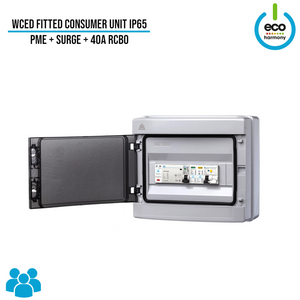
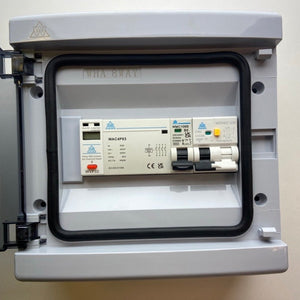
PEN Fault Detection + Surge Protection Device
Regular price From £77.50Regular price -
Save £2.50
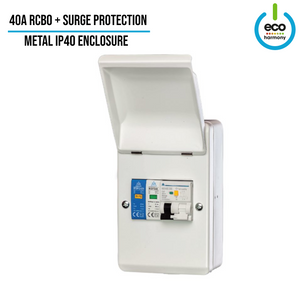
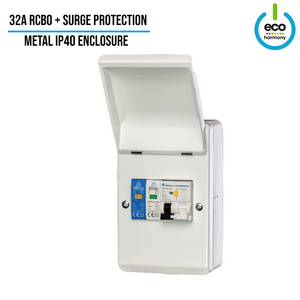
RCBO + Surge Protection Fitted Consumer Unit (IP30 / Indoor Use)
Regular price £32.50Regular price£35.00-£2.50 Sale price £32.50 -
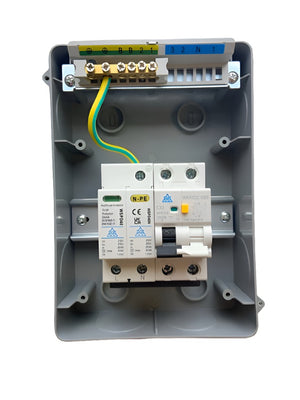
IP65 Consumer Unit with RCBO + Type 2 Surge Protection
Regular price £29.50Regular price


