
EV Charger Protection Finder — What Does My Charger Need?
What Electrical Protection Does Your EV Charger Need?
Every EV charger installed in the UK requires external electrical protection fitted upstream — regardless of what's built into the charger. Select your charger below to find out exactly what you need and why.
In plain English: Think of the protection unit as the safety box between your house electrics and your charger. It protects the cable, prevents shock hazards, and keeps your installation compliant with UK wiring regulations.
—
Not sure? We can help.
We haven't confirmed the full protection requirements for this model yet, or it may need a bespoke solution. Get in touch and we'll advise.
Contact EcoHarmony →Why does every EV charger need upstream protection?
Answers to the most common questions about EV charger electrical protection requirements in the UK.
Built-in protection in the charger protects the charger itself and anything downstream. The external protection unit protects the supply cable between your consumer unit and the charger — a separate legal requirement under BS 7671 section 722. Think of it as two different jobs covering two different parts of the circuit.
The cable from your fuseboard to your charger needs its own dedicated circuit breaker and protection — that's what the upstream unit does.
Most UK homes use a PME (Protective Multiple Earth) supply, where the neutral and earth are combined in one cable. If that combined PEN conductor breaks, the earth in your property can rise to a dangerous voltage. With an EV plugged in, its chassis becomes connected to that voltage — creating a serious shock risk. Most modern chargers detect this automatically and disconnect. The Tesla Wall Connector Gen 3, GivEnergy charger, and CTEK Chargestorm Connected 3 do not — so an external PME unit is required.
Imagine the earth wire in your house accidentally going live. A PME unit monitors for this and cuts the charger off instantly before anyone can touch the car.
IP ratings describe how well an enclosure resists dust and water. IP40 (also marketed as IP30 in some product names) is for indoor or fully sheltered locations only — inside a garage or a dry utility room. IP65 is fully weatherproof and is required for any outdoor installation where the unit could be exposed to rain, spray, or condensation. If in doubt, IP65 is always the safer choice.
IP65 = suitable anywhere outdoors. IP40 = dry indoor locations only.
Smart EV chargers contain sensitive electronics that can be permanently damaged by transient voltage spikes — caused by nearby lightning strikes, grid switching, or other power quality events. BS 7671 section 443 recommends surge protection in most UK domestic and commercial installations. All EcoHarmony protection units include Type 2 surge protection as standard.
A surge protection device is like a lightning rod for your charger's circuit board. It absorbs voltage spikes before they can cause damage.
Yes. For installations with 2–6 single-phase chargers, or 2–3 three-phase chargers, a single 3-phase multi-charger PME unit is the correct solution. It provides PME fault detection, overcurrent protection, and surge protection for all circuits from a single upstream installation — suitable for driveways, apartment blocks, workplaces, and small car parks.
You don't need one box per charger — one multi-charger unit covers up to 6 single-phase or 3 three-phase chargers.
Yes. Tesla's own UK installation manual states that "additional requirements apply to UK properties fed from a TN-C-S supply" and that an external device providing PEN fault detection and isolation in accordance with BS 7671 is required. Unlike most chargers, the Tesla Wall Connector does not include built-in PME/PEN fault detection, making it one of the few mainstream chargers that always requires an external PME protection unit on a PME supply.
Tesla handles DC fault detection, but the PME earth risk needs a separate unit on most UK properties. It's not optional — it's in Tesla's own manual.
-
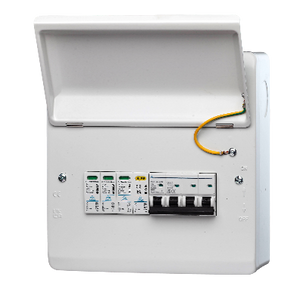
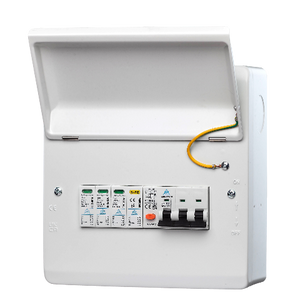
RCBO + Surge Protection – Fitted Consumer Unit IP40 – 3 Phase
Regular price From £65.00Regular price -


3-Phase PME PEN Fault Protection – 40A RCBO + Surge | Single EV Charger | BS7671 Compliant
Regular price From £65.00Regular price -
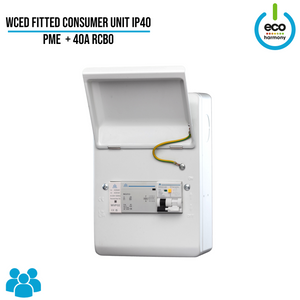
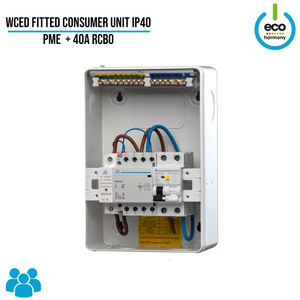
Fitted Consumer Unit IP40 – PME + 40A RCBO (Surge Protection + kWh Meter + Load Balancing Options Available)
Regular price From £80.00Regular price -
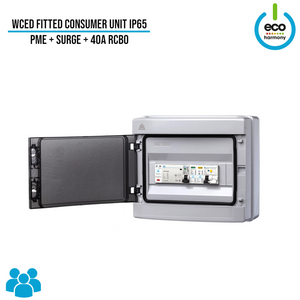
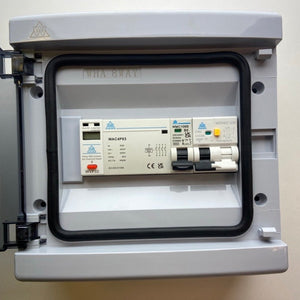
PEN Fault Detection + Surge Protection Device
Regular price From £77.50Regular price -
Save £2.50
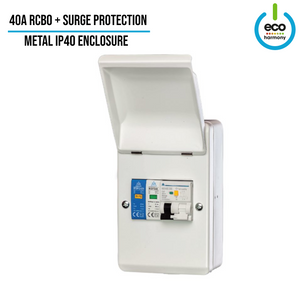
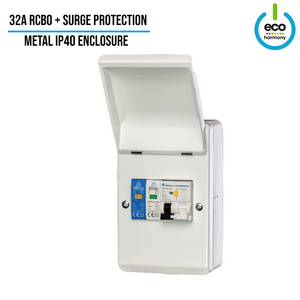
RCBO + Surge Protection Fitted Consumer Unit (IP30 / Indoor Use)
Regular price £32.50Regular price£35.00-£2.50 Sale price £32.50 -
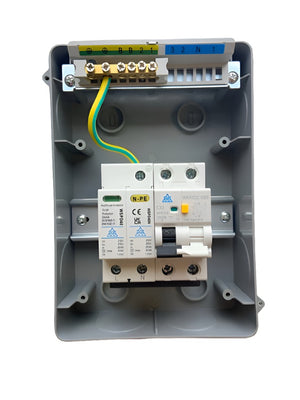
IP65 Consumer Unit with RCBO + Type 2 Surge Protection
Regular price £29.50Regular price


