
RCBO Types Explained: Type A, Type B and AFDD
RCBO Types Explained: A, B, F and AFDD
The letter after the RCBO’s current rating isn’t a grade, it describes which fault current waveforms the device can actually detect. Fitting the wrong type can mean a fault goes undetected even though the device looks perfectly normal.
Quick answer
Type A is the standard for most domestic circuits (AC and pulsating DC faults). Type B is needed where equipment can produce smooth DC fault current, commonly EV chargers, solar inverters and heat pumps. Type F sits between the two, for certain single-phase equipment with variable frequency drives, such as washing machines. AFDD is a separate function entirely: arc detection, not earth leakage.
What each type actually detects
| Type | Detects | Typical application |
|---|---|---|
| Type AC | Sinusoidal AC fault current only | Rare in new UK installs; largely superseded by Type A |
| Type A | AC fault current, plus pulsating DC fault current | Standard for most domestic and commercial circuits |
| Type F | Type A faults, plus certain composite waveforms from single-phase variable frequency equipment | Washing machines, some single-phase inverter-driven appliances |
| Type B | Type A and F faults, plus smooth DC fault current | EV chargers, solar inverters, three-phase heat pumps, and other equipment that can produce smooth DC leakage |
Each type is a superset of the one before it in terms of AC detection, but only Type B reliably detects smooth DC fault current. A Type A device simply won’t see a smooth DC fault: it isn’t less sensitive, it is blind to that waveform.
Why this matters in practice
Getting the type wrong doesn’t look like a fault on day one. The circuit works normally until the specific fault condition that type can’t detect actually occurs, at which point the protection simply isn’t there. This is why manufacturer documentation for EV chargers and heat pumps specifies the RCD type required rather than leaving it to a general default. See What is a Type B RCD? for the EV-specific detail.
Many modern EV chargers include their own internal DC leakage detection (an RDC-DD), which allows a Type A device upstream instead of Type B. Always check the specific charger’s installation manual rather than assuming either way.
AFDD: a different function entirely
AFDD stands for Arc Fault Detection Device. It is not an RCD type and doesn’t protect against earth leakage at all. It detects the electrical signature of arcing faults, such as a loose terminal or damaged cable insulation arcing intermittently, that can start a fire without ever tripping an MCB or RCD.
BS 7671:2018+A2:2022 recommends AFDDs for higher-risk locations: premises with sleeping accommodation, buildings with a significant fire risk to the fabric or contents, and locations with combustible construction materials, such as timber-framed buildings. Combination devices that bundle an RCBO with AFDD protection in one module are increasingly common where both functions are needed on a circuit.
Frequently asked questions
Can I fit a Type A RCBO where the manufacturer specifies Type B?
No. If the equipment manufacturer specifies Type B, fitting Type A leaves a genuine gap in protection against smooth DC fault current, even though the circuit will appear to work normally.
Is Type F ever needed for EV charging?
Type F is specified for certain single-phase variable frequency equipment, most commonly washing machines. EV chargers are covered by the Type A vs Type B decision, not Type F, unless a specific charger’s documentation says otherwise.
Do I need an AFDD as well as an RCBO?
They protect against different things, so where AFDD protection is warranted (see BS 7671 guidance on higher-risk locations) it is fitted in addition to, not instead of, the circuit’s RCD/RCBO protection. Combination RCBO+AFDD modules cover both in one device.
Related guides
Not sure what your install needs?
Use the Product Finder →-
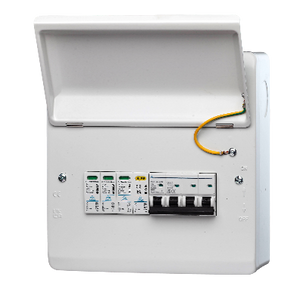
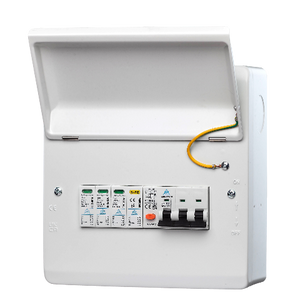
RCBO + Surge Protection – Fitted Consumer Unit IP40 – 3 Phase
Regular price From £65.00Regular price -


3-Phase PME PEN Fault Protection – 40A RCBO + Surge | Single EV Charger | BS7671 Compliant
Regular price From £65.00Regular price -
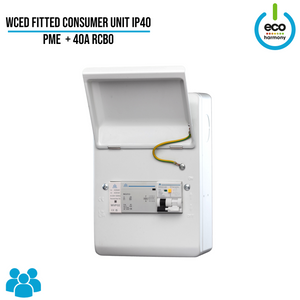
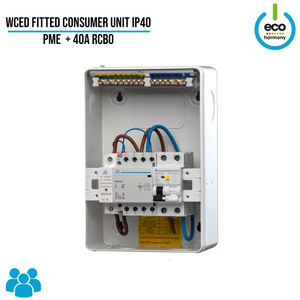
Fitted Consumer Unit IP40 – PME + 40A RCBO (Surge Protection + kWh Meter + Load Balancing Options Available)
Regular price From £80.00Regular price -
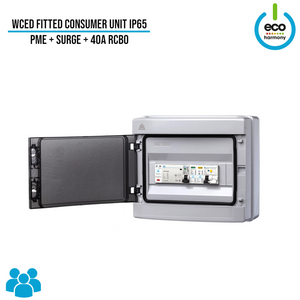
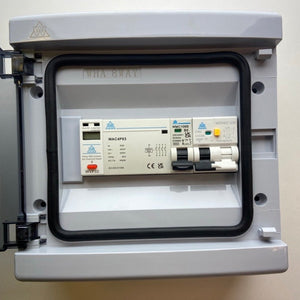
PEN Fault Detection + Surge Protection Device
Regular price From £77.50Regular price -
Save £2.50
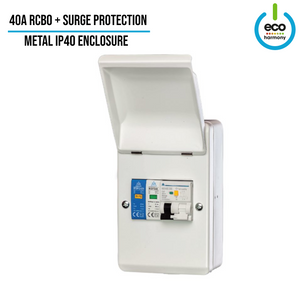
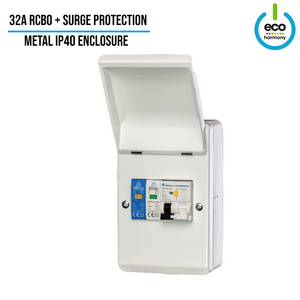
RCBO + Surge Protection Fitted Consumer Unit (IP30 / Indoor Use)
Regular price £32.50Regular price£35.00-£2.50 Sale price £32.50 -
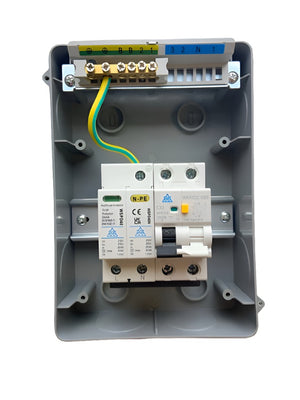
IP65 Consumer Unit with RCBO + Type 2 Surge Protection
Regular price £33.50Regular price£26.00Sale price £33.50


-


Simpson & Partners Cable Hook – Keep Your Charger Tidy & Stylish
Regular price £60.00Regular price -
Save £30.00


Home Series 7kW EV Charger – Type 2 Socket
Regular price From £550.00Regular price£580.00-£30.00 Sale price From £550.00 -


Home Series 7 kW Home EV Charger, Type 2 Tethered
Regular price From £620.00Regular price -


Free Colour Sample Card – Simpson & Partners EV Chargers
Regular price £0.00Regular price -
Sold out


Simpson & Partners Wireless Energy Manager – Smarter, Safer Charging
Regular price From £95.00Regular price


