
Freestanding EV Chargers — Posts & Pedestals
Freestanding EV Chargers: Posts, Pedestals & No-Wall Installs Explained
Freestanding — or "pedestal" — EV chargers are designed for exactly the situations where wall mounting isn't possible or isn't desirable: driveways set back from the house, listed and conservation-area properties, rendered or period façades you don't want to drill into, shared driveways and garage blocks, or simply a preference for a standalone, sculptural unit rather than a wall-mounted box. This page covers everything about how we install them properly — including the part most competitors get wrong.
Who a freestanding charger is for
In England, a single wall-mounted or pedestal-mounted EV charger generally doesn't require planning permission, provided it meets standard size and roadside-distance conditions — though listed buildings, conservation areas, and shared/leasehold driveways can still have additional requirements. Always check with your local planning authority for your specific property.
Gallery
Installed examples and colour options.


How installation actually works
This is the part that separates a properly designed freestanding installation from a charger simply bolted to a scaffold pole — and it's where most of the visible difference comes from.
A trench is dug for the cable run
Your electrician runs a supply cable from the consumer unit or distribution point to the charger's location, in a trench dug to the required depth.
A hole is prepared for the base
Rather than building shuttering and pouring wet concrete on site — which needs days to cure before the post can be fitted — a precast EV Block Mini is simply dropped into a prepared hole. It's manufactured off-site by EV Blocks, a specialist UK precast concrete manufacturer, so it arrives ready to install in any weather, with no cure time and a uniform, reliable finish every time.
The charger mounts via a base plate
A base plate designed specifically to fit the EV Block Mini connects the charger post securely to the block. The same system scales up to the EV Block 600 for Simpson & Partners' Business Series freestanding units, where a larger base is needed for dual sockets or heavier-duty commercial installations.
The cable runs up through the centre — fully hidden
This is the genuine point of difference: the supply cable enters through the bottom of the post and runs up the centre of the unit, completely concealed. Many freestanding chargers on the market are essentially a charger bolted onto a generic pole that was never designed for rear or bottom cable entry — the charger sits off-centre, and the cable is left visible running up the outside. Ours doesn't.
Simpson & Partners Freestanding, 7kW and 22kW, with EV Block Mini base included. In stock, UK trade pricing.
Browse freestanding chargers →Integrated pedestals vs. universal charger posts
Not all freestanding options work the same way, and it's worth understanding the difference before you buy. Broadly, the market splits into two approaches:
Universal posts — such as those from EV Tower, a well-established UK manufacturer of multi-brand mounting posts and plates — are a genuinely useful category, particularly for installers who need one post design that can accept several charger brands across different jobs. But because a universal post has to accommodate many different chargers, how well any specific charger sits on it — cable entry position, centring, overall finish — depends on how well that particular charger's mounting pattern matches the post, not just the post itself. It's always worth checking charger-to-post compatibility carefully before specifying a universal post with a brand it wasn't originally designed around.
Simpson & Partners' freestanding range takes the other approach: the charger and pedestal are designed together by the same manufacturer as a single integrated product, using the EV Block Mini base specifically built for it. That means the cable routing, centring, and finish are fixed by design rather than depending on how well a given charger happens to pair with a generic post.
| Simpson & Partners Freestanding (integrated pedestal) | Universal charger posts (e.g. EV Tower, and similar multi-brand systems) | |
|---|---|---|
| Design approach | Charger and post engineered together by one manufacturer | Post designed to accept multiple charger brands |
| Cable routing | Fixed by design — enters through the base, runs up the centre | Depends on the specific charger's mounting pattern and cable entry point |
| Charger fit | Purpose-built for this exact charger | Varies by charger — always confirm compatibility first |
| Base installation | Precast concrete EV Block Mini, no cure time | Varies by manufacturer and post system |
| Best suited to | A single, known charger — most residential installs | Installers needing flexibility across multiple charger brands and jobs |
Frequently Asked Questions
Do I need a wall at all for a freestanding charger?
No — that's the entire point. A freestanding charger mounts on its own dedicated post and base, so it can be positioned anywhere on your driveway or parking area, regardless of whether there's a wall nearby.
Are freestanding chargers suitable for listed buildings?
Yes, and this is one of the main reasons people choose them. Since nothing needs to be drilled or fixed into the building itself, a freestanding charger avoids the planning and heritage consent issues that wall-mounting on a listed or conservation-area property can raise. Always confirm the specific requirements with your local planning authority, as rules vary by property and area.
What ground works are actually needed?
Typically two things: a trench dug from the electricity supply to the charger's location for the cable run, and a hole prepared for the base. Using a precast EV Block Mini instead of wet-poured concrete means no curing time is needed before the post can be fitted — a meaningful time saving on site.
Is the cable really hidden, or does it show on the outside of the post?
On this system, the cable enters through the bottom of the base and runs up through the centre of the post, so it's fully concealed. This is a genuine design difference from generic pole-mounted setups, where the pole wasn't originally designed around the charger and the cable often has to be run visibly up the outside.
Can I get a freestanding charger with two sockets?
The Home Series freestanding unit is single-socket only. For two charging points on one post, the Business Series freestanding range (using the larger EV Block 600 base) offers a dual-socket configuration — better suited to commercial or higher-usage sites than a typical home installation.
What's the difference between a universal charger post and an integrated pedestal?
A universal post is designed to accept chargers from several different brands, which gives flexibility but means fit and cable routing depend on how well a specific charger's mounting pattern matches that post. An integrated pedestal, like the Simpson & Partners freestanding range, has the charger and post engineered together by one manufacturer, so centring, cable routing, and finish are fixed by design rather than dependent on compatibility between separate products.
Can any EV charger be fitted to any freestanding post?
Not necessarily. Universal posts are designed to accept a range of charger brands, but how well any specific charger fits — including cable entry position and centring — depends on that charger's own mounting pattern. Always check compatibility between the specific charger and post before purchasing, rather than assuming any combination will work equally well.
Does a freestanding charger cost more than a wall-mounted one?
The charger unit itself is the same either way — the additional cost is the base and ground works (the EV Block Mini and its installation), which is a one-off cost specific to your site. Contact us for a quote based on your property and cable run distance.
-
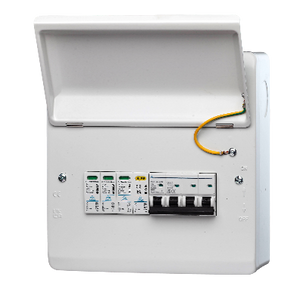
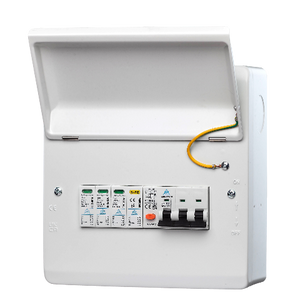
RCBO + Surge Protection – Fitted Consumer Unit IP40 – 3 Phase
Regular price From £65.00Regular price -


3-Phase PME PEN Fault Protection – 40A RCBO + Surge | Single EV Charger | BS7671 Compliant
Regular price From £65.00Regular price -
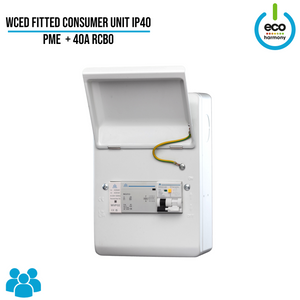
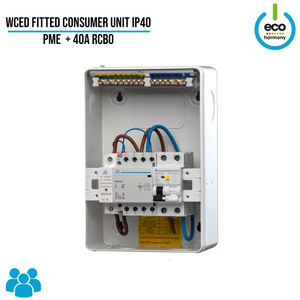
Fitted Consumer Unit IP40 – PME + 40A RCBO (Surge Protection + kWh Meter + Load Balancing Options Available)
Regular price From £80.00Regular price -
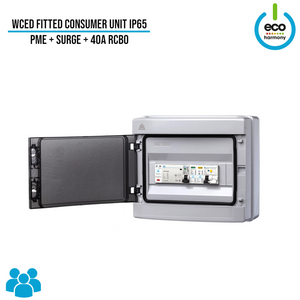
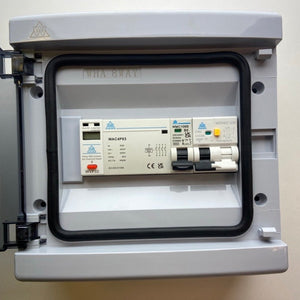
PEN Fault Detection + Surge Protection Device
Regular price From £77.50Regular price -
Save £2.50
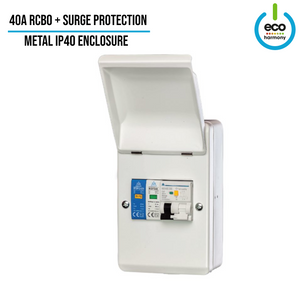
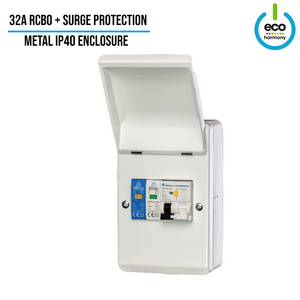
RCBO + Surge Protection Fitted Consumer Unit (IP30 / Indoor Use)
Regular price £32.50Regular price£35.00-£2.50 Sale price £32.50 -
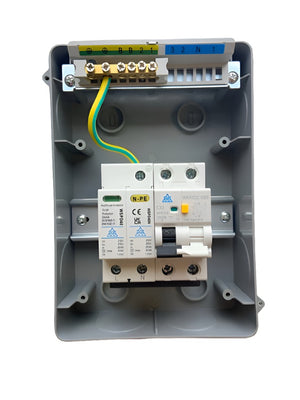
IP65 Consumer Unit with RCBO + Type 2 Surge Protection
Regular price £29.50Regular price


