
What is a Type B RCD? Why EV Charging Needs It
What Is a Type B RCD? Why EV Charging Needs It
Some EV chargers need Type B RCD protection on their supply. Some don’t. The difference comes down to whether the charger can detect its own DC leakage internally, not the charger’s price or brand.
Quick answer
A Type B RCD detects smooth DC fault current, which some EV charger and inverter electronics can produce under fault conditions and which a standard Type A RCD cannot reliably detect. Whether you need one depends on whether the charger has its own built-in DC leakage detection (an RDC-DD).
Why EV chargers can produce DC fault current
Inside an EV charger, the AC supply is converted for the vehicle’s onboard charger. Under certain fault conditions in that power electronics, the leakage current to earth can be a smooth DC waveform rather than the AC or pulsating DC waveform a standard RCD is built to detect.
A Type A RCD cannot see a smooth DC fault of this kind. It isn’t a sensitivity issue, the device simply doesn’t respond to that waveform at all, so a genuine fault could persist with no protection tripping.
Two ways to cover this risk
| Route | How it works | What it means for the installation |
|---|---|---|
| Type B RCD upstream | A Type B device on the charger’s supply detects both AC and smooth DC fault current | Higher-cost device, but works regardless of what protection (if any) is built into the charger |
| Charger with built-in RDC-DD | The charger itself continuously monitors for DC leakage and disconnects if it detects a fault, so the DC risk is handled before it reaches the upstream RCD | A standard Type A RCD upstream is then sufficient, because the DC fault case is already covered inside the charger |
Most modern EV chargers include an internal RDC-DD for exactly this reason, since it lets the installation use a Type A device rather than the more expensive Type B. Always check the specific charger’s installation manual: don’t assume either way from the charger’s price point or brand.
How to check what your charger needs
- Check the charger’s installation manual for a statement on DC leakage detection or RDC-DD
- “RCD protection built in” on its own is not the same claim, confirm it specifically covers DC leakage
- If nothing is stated, fit Type B upstream rather than assume Type A is sufficient
- For three-phase chargers, also confirm whether a 4-pole device is needed
For the difference between 2-pole and 4-pole devices, see 4-pole vs 2-pole RCDs for 3-phase.
Frequently asked questions
Do all EV chargers need a Type B RCD?
No. It depends on whether the charger has its own internal DC leakage detection. Many modern chargers do, which allows a Type A RCD on the supply. Check the specific charger’s installation manual rather than assuming either way.
Is Type B RCD protection the same as an RDC-DD?
No, though they cover related ground. A Type B RCD is a residual current device fitted upstream that detects both AC and smooth DC fault current. An RDC-DD is a component built into some chargers that monitors specifically for DC leakage and disconnects the charger itself. Either route addresses the DC leakage risk, they just sit at different points in the installation.
Why are Type B RCDs more expensive than Type A?
Type B devices contain additional detection circuitry to identify smooth DC fault current, which a standard Type A device doesn’t include. That extra capability is reflected in the price.
Related guides
Not sure what your install needs?
Use the Product Finder →-
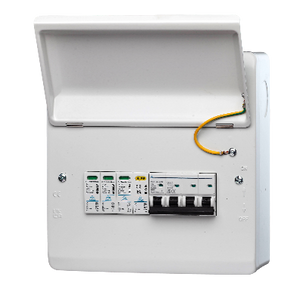
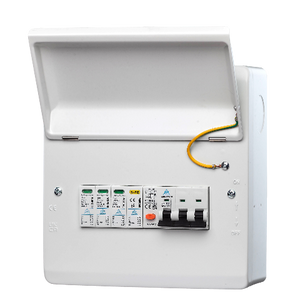
RCBO + Surge Protection – Fitted Consumer Unit IP40 – 3 Phase
Regular price From £65.00Regular price -


3-Phase PME PEN Fault Protection – 40A RCBO + Surge | Single EV Charger | BS7671 Compliant
Regular price From £65.00Regular price -
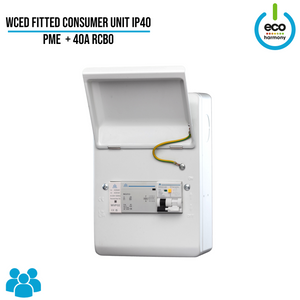
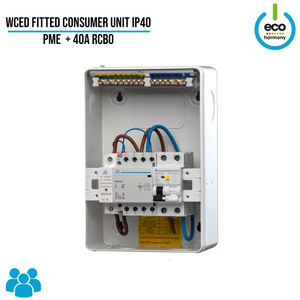
Fitted Consumer Unit IP40 – PME + 40A RCBO (Surge Protection + kWh Meter + Load Balancing Options Available)
Regular price From £80.00Regular price -
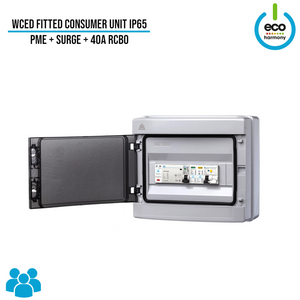
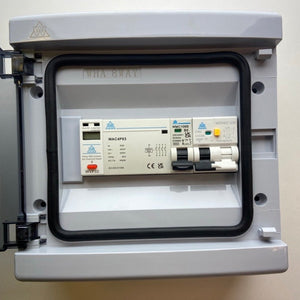
PEN Fault Detection + Surge Protection Device
Regular price From £77.50Regular price -
Save £2.50
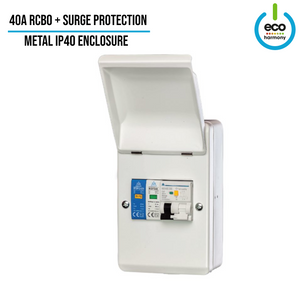
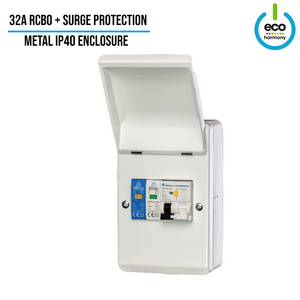
RCBO + Surge Protection Fitted Consumer Unit (IP30 / Indoor Use)
Regular price £32.50Regular price£35.00-£2.50 Sale price £32.50 -
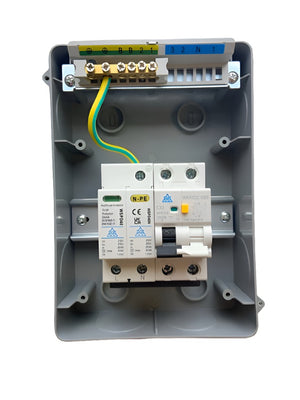
IP65 Consumer Unit with RCBO + Type 2 Surge Protection
Regular price £33.50Regular price£26.00Sale price £33.50


-


Simpson & Partners Cable Hook – Keep Your Charger Tidy & Stylish
Regular price £60.00Regular price -
Save £30.00


Home Series 7kW EV Charger – Type 2 Socket
Regular price From £550.00Regular price£580.00-£30.00 Sale price From £550.00 -


Home Series 7 kW Home EV Charger, Type 2 Tethered
Regular price From £620.00Regular price -


Free Colour Sample Card – Simpson & Partners EV Chargers
Regular price £0.00Regular price -
Sold out


Simpson & Partners Wireless Energy Manager – Smarter, Safer Charging
Regular price From £95.00Regular price


