
RCD Trip Sensitivity: 30mA vs 100mA vs 300mA Explained
RCD Trip Sensitivity: 30mA vs 100mA vs 300mA Explained
The mA rating on an RCD is its trip sensitivity, the leakage current at which it disconnects. Choosing the right one is as important as choosing the right type (A, B, F) or current rating.
Quick answer
30mA protects people from electric shock. 100mA and 300mA protect against fire and let an upstream device sit above 30mA devices without tripping them, so a single circuit fault doesn’t take out the whole installation.
The three main sensitivity ratings
| Sensitivity | Primary purpose | Common application |
|---|---|---|
| 30 mA | Personal protection: preventing fatal electric shock | Final circuits in all domestic and commercial installations |
| 100 mA | Fire protection and upstream discrimination | Upstream RCDs in TT systems, time delay discrimination |
| 300 mA | Fire protection and upstream selectivity | Main incomer RCDs in larger installations, upstream of 30mA devices |
Why 30mA protects against electric shock
The 30mA figure comes from the level at which, for typical contact durations, the risk of ventricular fibrillation (the heart going into a chaotic, life-threatening rhythm) starts to rise. RCDs protect by limiting both the current and the time it flows.
A 30mA RCD must disconnect within 300 ms at its rated 30mA, and within 40 ms at five times that (150mA), the sort of fault current a real shock would produce. That is why 30mA is the standard for final circuits supplying sockets, outdoor equipment and bathrooms.
Important
A 30mA RCD doesn’t stop you feeling a shock. It cuts the supply fast enough that the shock is much less likely to be fatal.
Why 100mA and 300mA devices exist
If 30mA is the safe threshold, why use anything higher? Discrimination: only the protective device closest to the fault should trip, leaving the rest of the installation live.
In a layered system, a 300mA upstream RCD won’t trip when a 30mA downstream RCD operates. A fault on one circuit disconnects that circuit only, not the whole supply. Without this, a fault on any circuit in a large installation could take down the entire board. Upstream devices are normally time-delayed, see time delay RCDs.
Higher-sensitivity devices also play a fire protection role. Sustained leakage of a few hundred milliamps can heat insulation enough to start a fire, and 100mA or 300mA devices upstream trip on that before a 30mA-only system would need to.
Sensitivity ratings in practice
| Location or application | Sensitivity | Reason |
|---|---|---|
| Domestic socket circuits | 30 mA | BS 7671 Reg 411.3.3: personal protection |
| Domestic lighting circuits | 30 mA | Required under BS 7671 for most installations |
| Bathroom and outdoor circuits | 30 mA | Enhanced shock-risk locations |
| EV charging circuits | 30 mA | Personal protection on accessible equipment |
| Upstream of 30mA RCDs (TT system) | 100 mA or 300 mA, S-type | Selectivity: must not trip when a 30mA device operates |
| Main incomer in large distribution boards | 300 mA | Upstream fire protection with full selectivity |
Frequently asked questions
Can I use a 100mA RCD for personal protection?
No. A 100mA RCD trips at more than three times the level where the risk of cardiac arrest becomes serious. 30mA is the required rating for personal protection on final circuits users can reach.
What is a 300mA S-type RCD?
An S-type (selective, or time-delay) RCD deliberately waits before tripping, so a downstream 30mA device operates first. S-types sit upstream of 30mA devices to keep selectivity. See Time delay RCDs: when and why.
Does a 30mA RCD protect against fire?
Partly. A 30mA RCD trips on small leakage currents that could heat insulation over time, but it is designed for shock protection rather than fire protection. Upstream 300mA RCDs give broader fire protection.
Related guides
Not sure what your install needs?
Use the Product Finder →-
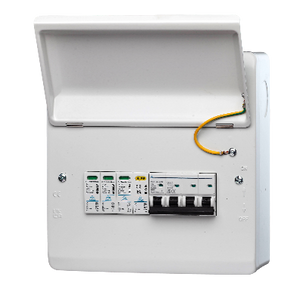
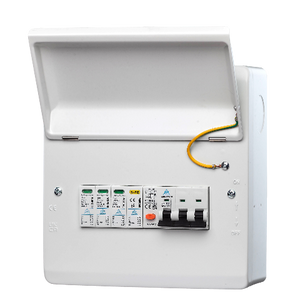
RCBO + Surge Protection – Fitted Consumer Unit IP40 – 3 Phase
Regular price From £65.00Regular price -


3-Phase PME PEN Fault Protection – 40A RCBO + Surge | Single EV Charger | BS7671 Compliant
Regular price From £65.00Regular price -
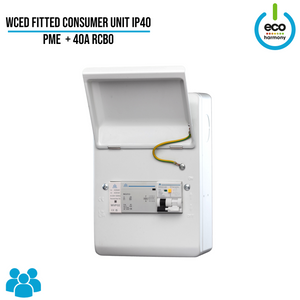
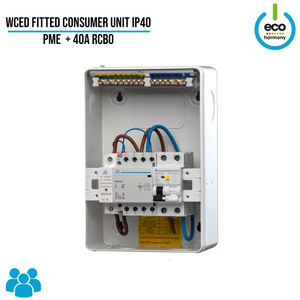
Fitted Consumer Unit IP40 – PME + 40A RCBO (Surge Protection + kWh Meter + Load Balancing Options Available)
Regular price From £80.00Regular price -
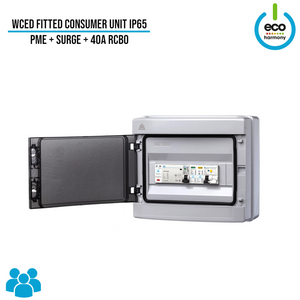
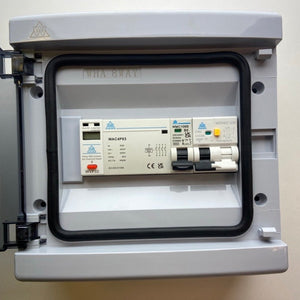
PEN Fault Detection + Surge Protection Device
Regular price From £77.50Regular price -
Save £2.50
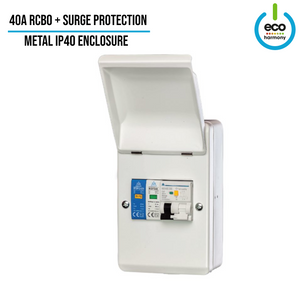
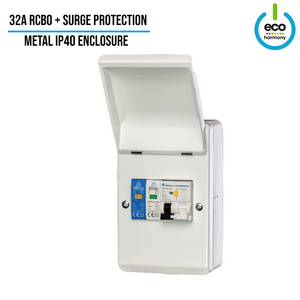
RCBO + Surge Protection Fitted Consumer Unit (IP30 / Indoor Use)
Regular price £32.50Regular price£35.00-£2.50 Sale price £32.50 -
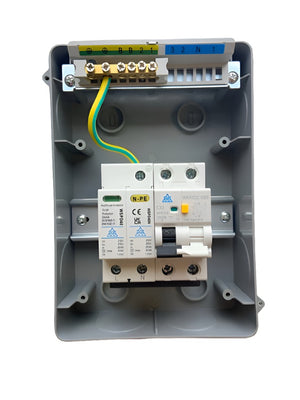
IP65 Consumer Unit with RCBO + Type 2 Surge Protection
Regular price £33.50Regular price£26.00Sale price £33.50


-


Simpson & Partners Cable Hook – Keep Your Charger Tidy & Stylish
Regular price £60.00Regular price -
Save £30.00


Home Series 7kW EV Charger – Type 2 Socket
Regular price From £550.00Regular price£580.00-£30.00 Sale price From £550.00 -


Home Series 7 kW Home EV Charger, Type 2 Tethered
Regular price From £620.00Regular price -


Free Colour Sample Card – Simpson & Partners EV Chargers
Regular price £0.00Regular price -
Sold out


Simpson & Partners Wireless Energy Manager – Smarter, Safer Charging
Regular price From £95.00Regular price


