
Type 1 vs Type 2 vs Type 1+2 SPD Explained
Type 1 vs Type 2 vs Type 1+2 SPD Explained
Surge protection devices come in three categories, defined by where they sit in the installation and how large a surge they are built to handle. Most UK homes and commercial sites need a Type 2 SPD at the consumer unit as a minimum.
Quick answer
Type 2 at the consumer unit is the standard for UK homes and commercial sites. Add Type 1, or a combined Type 1+2 unit, where there is a lightning protection system or overhead supply cables.
The three SPD categories
Electrical surges are brief overvoltage transients caused by lightning, grid switching or large motor loads. They are a common cause of electronic equipment failure and can contribute to electrical fires. SPDs divert the excess voltage safely to earth before it reaches connected equipment or wiring.
The three categories describe where in the supply chain a device is installed, not simply how powerful it is. Getting that right is central to specifying protection under BS 7671:2018+A2:2022.
| Type | Location | Impulse rating | Protects against | Standard |
|---|---|---|---|---|
| Type 1 | Origin of installation, at the main incomer before the consumer unit | 25–50 kA (Iimp) | Direct or near-direct lightning strikes on the building or service cables | BS EN 61643-11 |
| Type 2 | Consumer unit or distribution board | 5–40 kA (Imax) | Indirect lightning surges and switching transients from the grid or inside the building | BS EN 61643-11 |
| Type 3 | Point of use, at the socket or equipment | <5 kA | Residual surges not fully absorbed by upstream Type 1 or Type 2 devices | BS EN 61643-11 |
Type 1: when is it required?
Type 1 SPDs are needed when a building has a lightning protection system (LPS), when the supply comes in on overhead cables rather than underground ones, or when the site is at raised risk of a direct strike, such as isolated buildings, tall structures or areas with high lightning ground flash density. For a standard UK home with an underground supply and no LPS, Type 1 is not normally required.
Type 1 devices sit upstream of the consumer unit, at or near the service head or meter position, and are usually paired with a coordinated backup overcurrent device. Where that means working at the supply position, speak to your DNO first.
Type 2: the standard for UK homes and commercial sites
Type 2 SPDs are fitted at the consumer unit or distribution board. They cover the most common surge sources: indirect lightning, switching transients from the grid, and surges created inside the building by motors, air conditioning compressors and other inductive loads.
BS 7671:2018+A2:2022 (Section 443) requires protection against transient overvoltages to be considered on every installation. In practice a Type 2 SPD is now specified as standard on new and replacement consumer units. See Do I need surge protection? for how the risk assessment works.
The WCED WSPD range provides Type 2 SPDs in 2-pole, 3-pole and 4-pole versions at 40kA (Imax), for single-phase and three-phase installations.
Type 1+2 combined: when does it make sense?
A Type 1+2 SPD gives both levels of protection in one unit, fitted at the consumer unit position. It is the right choice when:
- the building has an external lightning protection system that needs Type 1
- the supply is on overhead cables, which raises direct-strike risk
- you want to future-proof against a lightning protection system being added later
- space is tight and one combined device is more practical than two
The WCED WSPDTE series provides Type 1+2 SPDs in 2-pole (2-module) and 4-pole (4-module) versions.
Which type do I need?
| Building or situation | SPD required |
|---|---|
| Standard home, underground supply, no LPS | Type 2 at the consumer unit |
| Building with a lightning protection system | Type 1+2 combined, or Type 1 at origin plus Type 2 at the consumer unit |
| Overhead supply cables (rural or older networks) | Type 1+2 combined at the consumer unit |
| Commercial site with sensitive electronics | Type 2 at the main board plus Type 3 at sensitive equipment |
| Solar PV installation | AC Type 2 at the inverter output plus DC Type 2 at the string combiner |
| EV charging circuit | Type 2 at the consumer unit or EV distribution board |
Frequently asked questions
Do I need a Type 1 SPD if there is no lightning protection system?
Generally no. For a standard home with underground supply cables and no external LPS, a Type 2 SPD at the consumer unit is the correct and sufficient specification. Type 1 is only needed where there is a direct-strike risk via the supply cables or an installed LPS.
What is the difference between Iimp and Imax?
Iimp (impulse current) is the rating for Type 1 SPDs: the ability to handle the high-energy, short-duration surge from a direct lightning strike. Imax (maximum discharge current) is the rating for Type 2 devices: the largest surge current they can handle without damage. They are measured with different waveforms and are not directly comparable.
Can I install a Type 2 SPD without a Type 1?
Yes. In most UK homes and light commercial installs, a Type 2 at the consumer unit is the correct and complete specification. A Type 1 is only added where direct-strike risk exists.
What is the BS number for a Type 2 SPD?
Type 2 SPDs are covered by BS EN 61643-11, the product standard manufacturers test and certify against. BS 7671 is the separate wiring regulation that says when an SPD should be fitted. The two numbers cover different things, which is a common source of confusion.
Is BS EN 61643-11 the same for Type 1, Type 2 and Type 1+2?
Yes. BS EN 61643-11 covers all three. The type classification describes the surge waveform and the location in the installation, not a separate standard.
Related guides
Not sure what your install needs?
Use the Product Finder →-
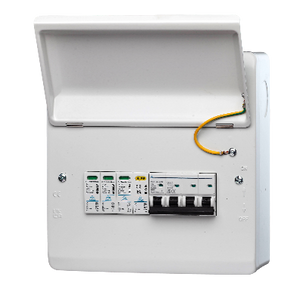
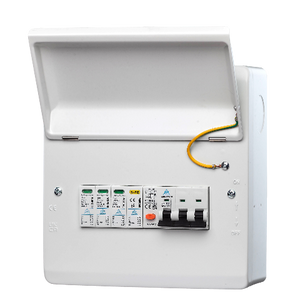
RCBO + Surge Protection – Fitted Consumer Unit IP40 – 3 Phase
Regular price From £65.00Regular price -


3-Phase PME PEN Fault Protection – 40A RCBO + Surge | Single EV Charger | BS7671 Compliant
Regular price From £65.00Regular price -
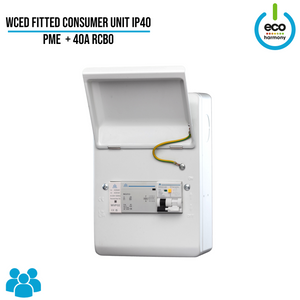
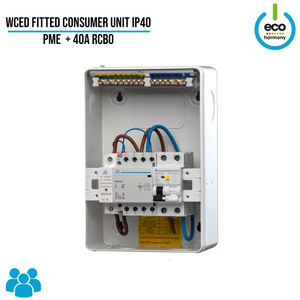
Fitted Consumer Unit IP40 – PME + 40A RCBO (Surge Protection + kWh Meter + Load Balancing Options Available)
Regular price From £80.00Regular price -
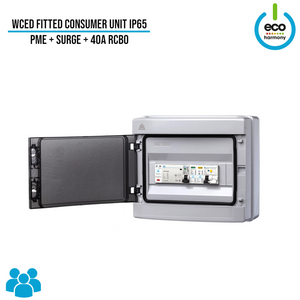
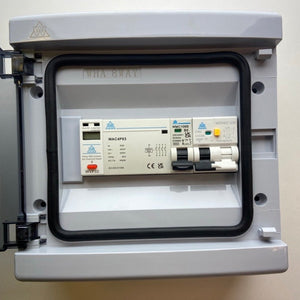
PEN Fault Detection + Surge Protection Device
Regular price From £77.50Regular price -
Save £2.50
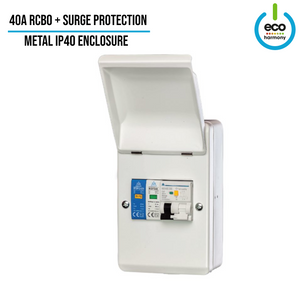
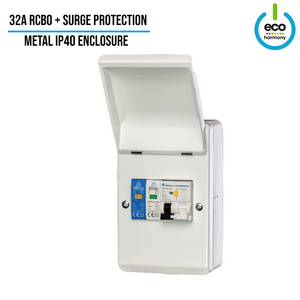
RCBO + Surge Protection Fitted Consumer Unit (IP30 / Indoor Use)
Regular price £32.50Regular price£35.00-£2.50 Sale price £32.50 -
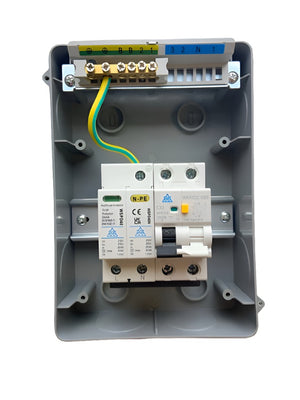
IP65 Consumer Unit with RCBO + Type 2 Surge Protection
Regular price £33.50Regular price£26.00Sale price £33.50


-


Simpson & Partners Cable Hook – Keep Your Charger Tidy & Stylish
Regular price £60.00Regular price -
Save £30.00


Home Series 7kW EV Charger – Type 2 Socket
Regular price From £550.00Regular price£580.00-£30.00 Sale price From £550.00 -


Home Series 7 kW Home EV Charger, Type 2 Tethered
Regular price From £620.00Regular price -


Free Colour Sample Card – Simpson & Partners EV Chargers
Regular price £0.00Regular price -
Sold out


Simpson & Partners Wireless Energy Manager – Smarter, Safer Charging
Regular price From £95.00Regular price


