
PME Protection and Surge Protection Questions
PME & PEN Fault FAQs
The short answers to the PME and PEN fault questions that come up most often, in one place.
Quick answer
This page is a fast-reference FAQ set. For the full explanation of what PME and a PEN fault actually are, start with What is PME in EV charging?
The basics
Quick answers to the questions that come up before anyone's looked at a specific installation.
Frequently asked questions
What does PME stand for?
Protective Multiple Earthing. It's the UK's TN-C-S supply arrangement, where neutral and earth are combined in the network and split at your property.
Is PME dangerous?
Not under normal operation. The risk is specific to an open PEN fault, an uncommon event where the combined conductor fails, and that risk is what the EV-specific protection requirements address.
Does my house have a PME supply?
Most UK homes do. A PME supply takes its earth from the supplier's cable; a TT supply has its own earth rod nearby. Your installer or DNO can confirm.
What's the difference between PME and PEN?
PME is the name for the earthing system. PEN is the name of the specific conductor (Protective Earth and Neutral combined) inside that system whose failure is the thing being protected against.
Does every EV charger installation need PEN fault protection?
Only on a PME supply, and primarily for outdoor use, per BS 7671 Regulation 722.411.4.1. See our earth rod guide and the main PME page for the full decision tree.
Can I tell if a PEN fault has happened just by looking?
No. A PEN fault gives no visible warning at the property, the supply continues working normally. That's exactly why active monitoring (a PEN fault detection device, or the charger's own built-in detection) is needed rather than relying on noticing something's wrong.
Is a PEN fault the same as a power cut?
No. A power cut means no supply at all. A PEN fault can occur while the supply otherwise continues to work, which is part of what makes it hard to notice without a monitoring device.
Do I need to tell my DNO if I'm having PEN fault protection fitted?
The electrical work itself is typically notifiable under Part P rather than requiring separate DNO notification for the protection device, but your installer should confirm based on the specifics of the job and any wider supply changes involved.
Does a PEN fault detection device protect the whole house, or just the EV charger circuit?
Typically just the circuit it's fitted to, usually the EV charger circuit specifically, rather than the whole installation, since that's where the EV-specific outdoor risk applies.
Can a PEN fault detection unit fail?
Like any electrical device, yes, which is why periodic function testing is specified rather than treating it as fit-and-forget. Follow the manufacturer's test interval and procedure.
Is PME unique to the UK?
The specific TN-C-S terminology and the EV-specific regulatory response are a UK (BS 7671) context, though combined neutral-earth network designs exist in other countries under different names and rules.
Related guides
-
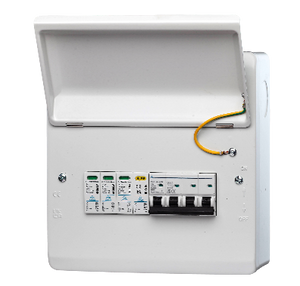
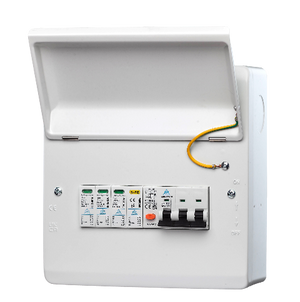
RCBO + Surge Protection – Fitted Consumer Unit IP40 – 3 Phase
Regular price From £65.00Regular price -


3-Phase PME PEN Fault Protection – 40A RCBO + Surge | Single EV Charger | BS7671 Compliant
Regular price From £65.00Regular price -
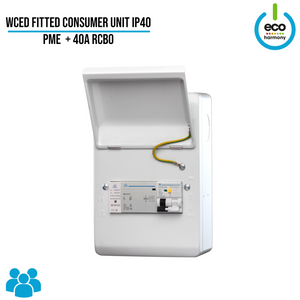
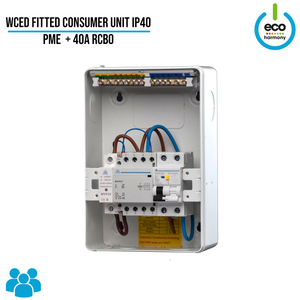
Fitted Consumer Unit IP40 – PME + 40A RCBO (Surge Protection + kWh Meter + Load Balancing Options Available)
Regular price From £80.00Regular price -
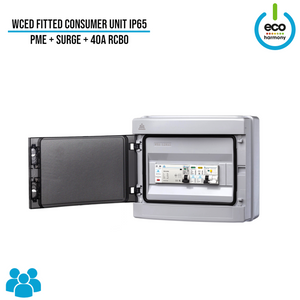
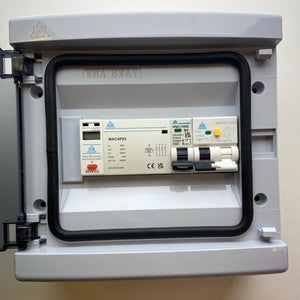
PEN Fault Detection + Surge Protection Device
Regular price From £77.50Regular price -
Save £2.50
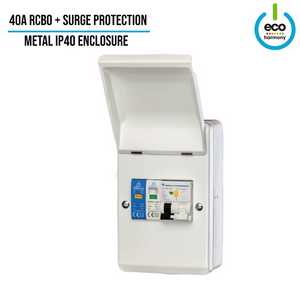
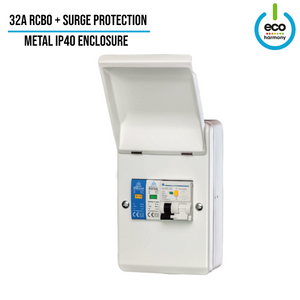
RCBO + Surge Protection Fitted Consumer Unit (IP30 / Indoor Use)
Regular price £32.50Regular price£35.00-£2.50 Sale price £32.50 -
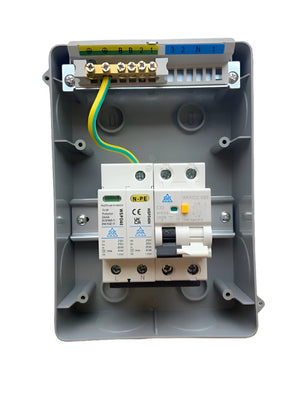
IP65 Consumer Unit with RCBO + Type 2 Surge Protection
Regular price £29.50Regular price


