
TPN 3-Phase Distribution Boards Explained
TPN 3-Phase Distribution Boards Explained
TPN (Triple Pole and Neutral) distribution boards are built for three-phase supplies. They spread load across three phases, take both three-pole and single-pole devices, and suit 11–22kW EV charging, commercial premises and any site fed from a three-phase incomer.
Quick answer
A TPN board carries L1, L2, L3 and neutral on its busbar, so one board can feed three-phase loads (such as a 22kW charger) and single-phase circuits together. It needs a three-phase supply.
What TPN means
TPN stands for Triple Pole and Neutral. The busbar carries all three phases and a neutral, so both 3-pole devices (three-phase loads) and single-pole devices (one phase and neutral) can go in the same board.
That flexibility is the main advantage in a mixed installation: a 22kW three-phase EV charger on a 3-pole MCB, alongside single-phase lighting and socket circuits on individual RCBOs, all from one board.
As three-phase EV charging, solar and battery systems become more common, TPN boards have moved from a specialist commercial product to something many installers meet regularly.
TPN board vs single-phase consumer unit
| Feature | Single-phase consumer unit | TPN 3-phase board |
|---|---|---|
| Supply | 230V (L + N) | 400V three-phase (L1 + L2 + L3 + N) |
| Busbar phases | 1 | 3, balanced across the ways |
| 3-pole device support | No | Yes |
| Single-pole device support | Yes | Yes |
| Load distribution | Limited to one phase | Can be spread across all three phases |
| Typical applications | Domestic, small commercial | Three-phase EV charging, commercial premises, light industrial |
WCED WTPN series
The WTPN range is a 1.2mm steel three-phase board to BS EN 61439-3, for commercial, industrial and high-demand domestic EV installations. It has a 125A 4-pole main switch and a Type 2 surge protection device as standard, and comes in a range of way counts from 4 to 24. You populate it with the MCBs and RCBOs your circuits need.
- 125A 4-pole main switch as standard
- Type 2 SPD fitted as standard
- 4 to 24 way options
- Solid copper busbar for low-impedance connections
- Accepts 3-pole and single-pole devices
- Extension boards and spreader boxes to expand later
For commercial projects, see 3-phase distribution boards for commercial work.
Sizing a board for EV charging
| Charger type | Charger output | Current per phase | Board and protection |
|---|---|---|---|
| Single-phase 7kW | 7kW (32A) | 32A on one phase | Single-phase board, 32A RCBO |
| Three-phase 11kW | 11kW (16A per phase) | 16A × 3 phases | TPN board, 3-pole 20A MCB, plus Type B RCD where the charger has no DC leakage detection |
| Three-phase 22kW | 22kW (32A per phase) | 32A × 3 phases | TPN board, 3-pole 40A MCB, plus Type B RCD where the charger has no DC leakage detection |
Whether you need a Type B device depends on whether the charger has its own DC leakage protection. See What is a Type B RCD?
Frequently asked questions
Can I install a TPN board on a single-phase supply?
No. A TPN board needs a three-phase supply. On a single-phase supply two of the three busbars would be dead and any 3-pole device would not work correctly. For a single-phase EV sub-board, use a single-phase consumer unit or EV connection unit.
How do I balance the load across three phases?
Spread single-phase circuits as evenly as you can across L1, L2 and L3, roughly equal numbers on each. That minimises neutral current and stops one phase being overloaded while the others sit idle. Many boards label the ways by phase to make this easy.
Do I need a three-phase supply from my DNO for a 22kW EV charger?
Yes. A 22kW charger needs three-phase. That normally means a new supply application to your DNO, who assess whether the network can support the extra load and quote for the connection. Lead times vary but are typically 4 to 12 weeks.
Related guides
Not sure what your install needs?
Use the Product Finder →-
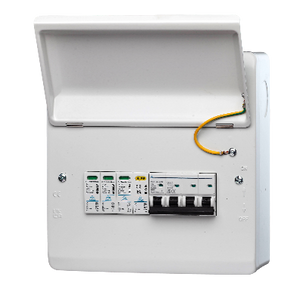
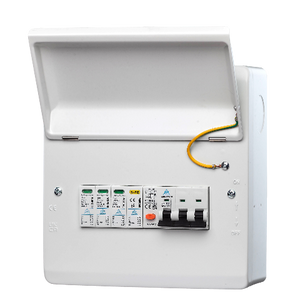
RCBO + Surge Protection – Fitted Consumer Unit IP40 – 3 Phase
Regular price From £65.00Regular price -


3-Phase PME PEN Fault Protection – 40A RCBO + Surge | Single EV Charger | BS7671 Compliant
Regular price From £65.00Regular price -
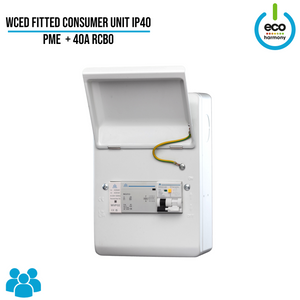
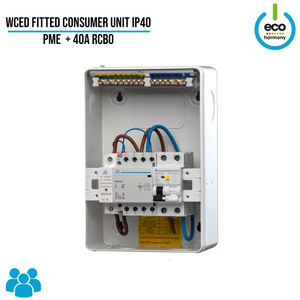
Fitted Consumer Unit IP40 – PME + 40A RCBO (Surge Protection + kWh Meter + Load Balancing Options Available)
Regular price From £80.00Regular price -
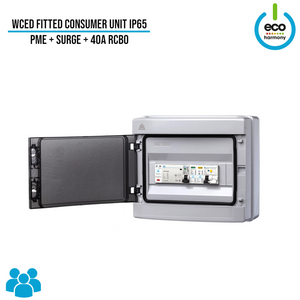
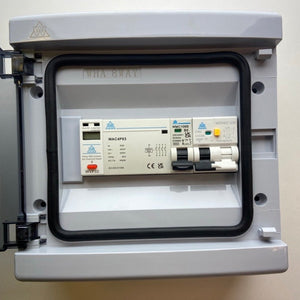
PEN Fault Detection + Surge Protection Device
Regular price From £77.50Regular price -
Save £2.50
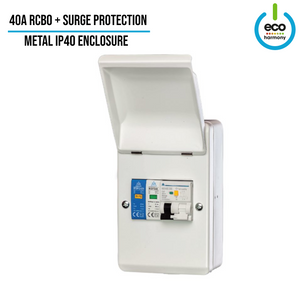
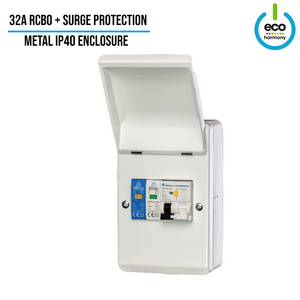
RCBO + Surge Protection Fitted Consumer Unit (IP30 / Indoor Use)
Regular price £32.50Regular price£35.00-£2.50 Sale price £32.50 -
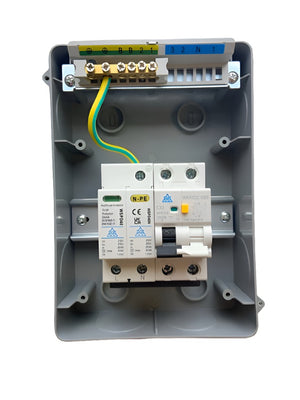
IP65 Consumer Unit with RCBO + Type 2 Surge Protection
Regular price £33.50Regular price£26.00Sale price £33.50


-


Simpson & Partners Cable Hook – Keep Your Charger Tidy & Stylish
Regular price £60.00Regular price -
Save £30.00


Home Series 7kW EV Charger – Type 2 Socket
Regular price From £550.00Regular price£580.00-£30.00 Sale price From £550.00 -


Home Series 7 kW Home EV Charger, Type 2 Tethered
Regular price From £620.00Regular price -


Free Colour Sample Card – Simpson & Partners EV Chargers
Regular price £0.00Regular price -
Sold out


Simpson & Partners Wireless Energy Manager – Smarter, Safer Charging
Regular price From £95.00Regular price


