
PME Protection Devices for EV Chargers (Instead of Earth Rods)
PME Protection Devices for EV Chargers (Earth Rod Alternative Explained)
PME protection devices are the modern solution for BS 7671-compliant EV charging on UK TN-C-S supplies. They detect PEN conductor faults electronically and disconnect supply automatically — faster, more reliably, and without any groundwork.
A PME protection device (WCED board) monitors supply voltage on a TN-C-S network and automatically disconnects the EV charger circuit when a PEN fault is detected. It achieves the BS 7671 Section 722 ADS requirement without an earth rod, without soil testing, and consistently regardless of ground conditions. EcoHarmony stocks single-phase and three-phase WCED boards for fast UK dispatch.
A PME protection device is a small board that fits between your electricity supply and your EV charger. Its one job is to watch for a specific type of electrical fault on your supply — and if it ever detects one, it cuts power to the charger immediately, before anything dangerous can happen.
It's a bit like a smoke detector for a very specific electrical fault. Sits there doing its job silently 24/7, and acts in milliseconds if needed. No digging required. No soil testing. Just bolt it on and wire it in.
What a PME Protection Device Does — The Technical Explanation
A PME protection device (implemented as a WCED — Wiring Centre with External Disconnection — distribution board) is installed upstream of the EV charger in the supply circuit. It continuously monitors the voltage between line (L), neutral (N), and protective earth (PE).
Continuous monitoring
Watches the supply voltage relationship between L, N, and PE 24/7. Under normal conditions: L-to-N ≈230V, N-to-PE ≈0–5V.
Fault detection
When a PEN conductor fails upstream, voltage falls outside the safe band (below 207V or above 253V). The device detects this immediately.
Automatic isolation
Supply to the EV charger is disconnected within milliseconds — before dangerous touch voltages can develop on the vehicle or cable.
⚠ What PME protection is NOT
- Not a surge protection device (SPD) — those protect against transient voltage spikes
- Not an RCD or RCBO replacement — those detect circuit-level earth leakage current
- Not overcurrent protection — an RCBO is still required in the circuit
- PME protection specifically detects upstream PEN conductor failure on TN-C-S networks
🔧 Technical: Exactly how PME voltage monitoring works
Healthy TN-C-S supply: L-to-N ≈230V, N-to-PE ≈0–5V, L-to-PE ≈230V.
Under open PEN fault: The neutral conductor loses its earth reference. Load current attempts to return via the CPC. N-to-PE voltage rises — potentially approaching 230V under full load. Supply voltage as measured L-to-N may collapse (partial fault) or appear normal while earth potential has risen dangerously.
The device disconnects when voltage falls below 207V or rises above 253V — capturing both the voltage collapse and the earth rise scenarios. Disconnection typically occurs within one or two supply cycles (20–40ms at 50Hz).
Do I Need a PME Protection Device for My EV Charger?
| Supply Type | Charger with Integrated PME Protection | Standard Charger (no integrated protection) |
|---|---|---|
| TN-C-S (PME) — ~80% of UK homes | Install directly — no WCED board or earth rod needed | External WCED PME board required (or earth rod — legacy) |
| TT system — rural/older properties | Standard ADS — no PME device needed | Standard ADS — no PME device needed |
| TN-S — older infrastructure | No PEN conductor — no PME device needed | No PEN conductor — no PME device needed |
Chargers with integrated PME protection (like Simpson & Partners): No external WCED board needed. The charger handles it internally, directly satisfying BS 7671 Reg 722.411.4.1.
PME Device vs Earth Rod — Why Devices Win
| Criteria | Earth Rod (TT Conversion) | WCED PME Board |
|---|---|---|
| Fault detection method | Passive — relies on soil resistance | Active — electronic voltage monitoring |
| Automatic disconnection? | No — no supply isolation | Yes — disconnects within milliseconds |
| Directly achieves ADS? | No — requires separate RCD for ADS | Yes — integrated disconnection on fault |
| Urban installation performance | Often poor — rock, clay, concrete, buried services | Consistent everywhere |
| Installation time | 2–4 hours including groundwork and Ra test | ~45 minutes |
| Ongoing maintenance | Electrode resistance should be retested periodically | No periodic maintenance required |
| Documentation required | Ra test certificate, ENA TS 41-24 | Device commissioning record only |
What's Inside a WCED Board — and Why It Saves Time
EcoHarmony's WCED boards are purpose-built for EV charging on PME supplies, fully assembled and pre-tested. Everything needed in one unit:
PME protection module
Voltage monitoring and automatic isolation on PEN fault detection. The core function — addresses the BS 7671 Reg 722.411.4.1 requirement.
Type A RCBO
AC earth leakage (30mA) and overcurrent protection for the EV circuit. Minimum standard under BS 7671 Section 722.
Surge Protection Device (SPD)
Type 2 transient overvoltage protection against lightning and switching events. Included as standard — no separate SPD needed.
IP65 enclosure
Weatherproof rated. Suitable for external installation in all UK weather conditions. All components pre-wired and tested.
The fully assembled approach eliminates on-site component selection errors, reduces wiring time, and means the board is commissioned as a tested system rather than individual parts assembled in the field.
Where the WCED Board Fits in the Circuit
Supply feed from consumer unit
A dedicated circuit from the main consumer unit to the WCED board — typically 32A or 40A for 7kW single-phase. The WCED board's own RCBO protects this circuit.
WCED board — between supply and charger
Installed in series with the charger supply. All power to the charger passes through the board. Monitors supply continuously. No changes needed to the charger itself.
EV charger downstream
The charger connects to the board output. When the board detects a fault, the entire supply to the charger is isolated. Works with any charger brand — Zappi, Ohme, Hypervolt, Pod Point, Wallbox, etc.
Commission and certify
Test supply voltage, verify RCBO operation, confirm fault disconnection behaviour per device documentation. Note "TN-C-S with external disconnection device" on the installation certificate.
Products Available from EcoHarmony
WCED Single-Phase PME Board
PME protection + Type A RCBO + SPD. Fully assembled, IP65, tested. Compatible with any standard EV charger. UK-stocked for fast dispatch. Competitive trade pricing available.
View Single-Phase Boards →WCED Three-Phase PME Board
Three-phase PME protection + RCBOs + SPD. For 22kW EV charging and commercial installations on PME supplies. Fully assembled. Call for volume pricing.
View Three-Phase Boards →Simpson & Partners Chargers
Built-in PEN fault detection. No external WCED board, no earth rod required. The simplest route to PME compliance for new installations.
View Charger Range →Need a PME-compliant EV charging solution?
Fully assembled WCED boards and integrated Simpson & Partners chargers — both UK-stocked, installer-ready, BS 7671 compliant.
Frequently Asked Questions
What is a PME protection device for EV charging?
Can I use a WCED board with any EV charger?
Is a PME protection board the same as a surge protector?
Do I still need an RCBO with a PME protection board?
Can I retrofit a WCED board to an existing EV charger?
What does WCED stand for?
How long does it take to install a WCED board?
Do Simpson & Partners chargers need a WCED board?
Technical Glossary
Explore Our Guides
A different set of guides each time you visit — covering troubleshooting, buying advice, technical explainers, and more.
-
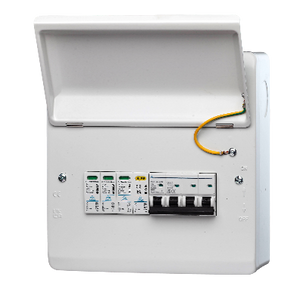

RCBO + Surge Protection – Fitted Consumer Unit IP40 – 3 Phase
Regular price From £65.00Regular price -

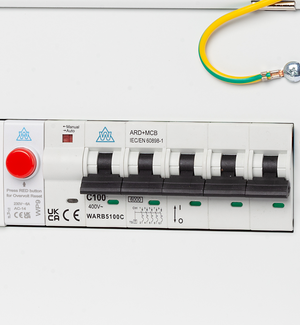
3-Phase PME PEN Fault Protection – 40A RCBO + Surge | Single EV Charger | BS7671 Compliant
Regular price From £65.00Regular price -
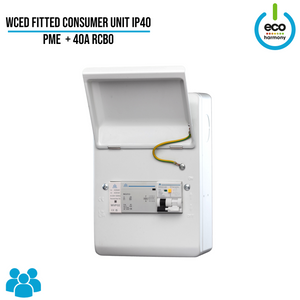

Fitted Consumer Unit IP40 – PME + 40A RCBO (Surge Protection + kWh Meter + Load Balancing Options Available)
Regular price From £80.00Regular price -
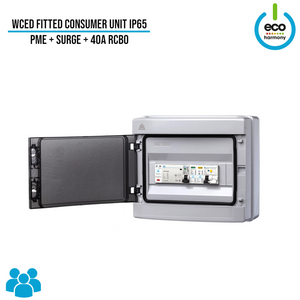

PEN Fault Detection + Surge Protection Device
Regular price From £77.50Regular price -
Save £2.50
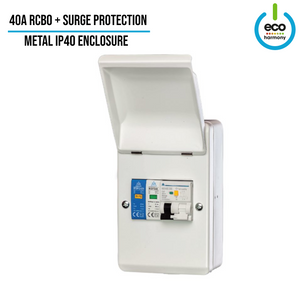

RCBO + Surge Protection Fitted Consumer Unit (IP30 / Indoor Use)
Regular price £32.50Regular price£35.00-£2.50 Sale price £32.50 -
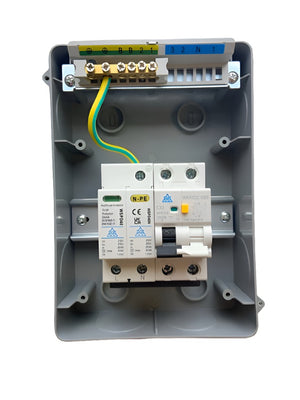

IP65 Consumer Unit with RCBO + Type 2 Surge Protection
Regular price £33.50Regular price£26.00Sale price £33.50


-


Simpson & Partners Cable Hook – Keep Your Charger Tidy & Stylish
Regular price £60.00Regular price -


Home Series 7 kW Plus Home EV Charger, Type 2 Tethered
Regular price From £715.00Regular price -


Home Series 7kW Plus EV Charger – Type 2 Socket
Regular price From £600.00Regular price -


Free Colour Sample Card – Simpson & Partners EV Chargers
Regular price £0.00Regular price -


Home Series 7kW Basic EV Charger – Type 2 Socket
Regular price £500.00Regular price


