
Simpson & Partners EV Charger Features | Repairable, Smart & V2G Ready
Simpson & Partners EV Chargers: Basic vs Plus — Full UK Buyer Guide
Both ranges deliver the same 7kW charging speed with the same integrated PME protection. The real difference is what happens after the power goes in — how intelligently the charger manages your home's energy, integrates with solar, and prepares for the future.
If you want simple, reliable home charging with app control and scheduled charging — Basic is the right choice. If you have solar panels, want to take advantage of smart tariffs like Octopus Intelligent, or want a future-proof system as your home energy setup evolves — Plus is the right choice. Both include the same integrated PME protection. No external WCED board or earth rod needed for either on a UK PME supply.
Basic: Think of it as the smart standard. You get a reliable charger with app control, scheduled charging so your car tops up overnight on cheap rates, and all the safety built in. For most people, this is everything they actually need.
Plus: For people who want more. If you have solar panels and want to charge using your own generated power, or if you're on a dynamic tariff like Octopus Agile, the Plus range has the intelligence to manage all of that automatically. It's also the one to choose if you're thinking about adding a home battery or heat pump in future.
Not sure? Solar now or planned within a few years = Plus. Pure charging with no energy complexity = Basic.
Basic vs Plus — At a Glance
| Feature | Basic | Plus |
|---|---|---|
| Charging speed | 7kW (single-phase) | 7kW (single-phase) / 22kW (3-phase) |
| PME / PEN fault protection | Built in — no earth rod needed | Built in — no earth rod needed |
| App control & scheduling | Yes | Yes |
| Energy management | Basic load balancing (wired CT clamp) | Advanced smart energy system |
| Solar / PV integration | Not supported | Fully supported |
| Smart tariff support | Scheduled charging only | Full Octopus & smart tariff integration |
| Load balancing type | Wired only | Wired + wireless options |
| Connectivity | WiFi | WiFi + Ethernet |
| Build / finish | Plastic lid — white or black | Premium metal / wood finish options |
| Future-proofing | Standard | High — solar, battery, smart grid ready |
| OZEV approved | Yes | Yes |
| Warranty | 5 years | 5 years |
| Right to repair | Yes | Yes |
What Actually Matters — The 6 Key Differences
The charging speed is the same. Both are safe, reliable, well-built chargers. The differences that actually matter come down to these six areas:
Energy Management
The biggest dividing line. Basic has wired load balancing to prevent overloading your supply. Plus has a full smart energy management system that actively optimises when and how fast the car charges based on solar output, tariff prices, and household demand.
Solar Integration
Plus only. If you have solar PV panels, the Plus charger can detect excess generation and automatically ramp charging up to use it — so instead of exporting cheap electricity to the grid, you're putting it straight into your car.
Load Balancing Type
Both models prevent your supply from being overloaded. Basic uses a wired CT clamp only. Plus adds a wireless option — useful for retrofits where running a CT clamp cable back to the charger would be difficult.
Connectivity
Basic connects via WiFi — simple, and fine for most homes. Plus adds Ethernet as an option, giving a more stable hardwired connection for installations where WiFi signal at the charger location is weak or unreliable.
Build & Finish
Basic has a plastic lid — available in white or black. Plus introduces premium metal and wood finish options. If the charger is prominently visible on a garage wall or driveway, the Plus aesthetic is noticeably more refined.
Future-Proofing
Plus is designed as part of a smart energy ecosystem — it can grow with your home as you add solar, home battery storage, or heat pumps. If you're building a more integrated home energy setup, Plus has the connectivity and intelligence to participate in it.
The Basic Range — For Most Homes, This Is Enough
The Simpson & Partners Basic range is the right choice for the majority of UK homeowners who want a reliable, smart, good-looking EV charger without energy management complexity. It's a well-specified charger — not a stripped-down entry model.
Choose Basic if: You don't have solar panels and aren't planning to add them soon, you charge overnight on a fixed cheap tariff, and you want the simplest compliant installation with no extra components.
App control
Full remote control via the Simpson & Partners app. Start, stop, schedule, and monitor charging from your phone. Works on iOS and Android.
Scheduled charging
Set your car to charge overnight during cheap off-peak electricity hours — Octopus Go, Economy 7, and similar tariffs all work. Simple to configure in the app.
Wired load balancing
CT clamp monitors your main supply. If household demand is high, charging slows automatically so you never trip the supply fuse. Essential for homes without a big enough supply to run everything at full draw.
Integrated PME protection
Built-in PEN fault detection. No earth rod. No WCED board. Satisfies BS 7671 Reg 722.411.4.1 on TN-C-S supplies without any additional components — just the charger and an RCBO in your consumer unit.
Right to repair
Simpson & Partners design for repairability — the unit can be serviced rather than replaced as a whole on most faults. Unusual in the EV charging market and a genuine long-term cost advantage.
Socket or tethered
Basic Socket accepts any Type 2 cable — good if multiple vehicles with different cable lengths use the charger. Basic Tethered has an 8m cable permanently attached — convenient, especially for regular single-vehicle users.
Basic Socket
Use your own Type 2 cable. Ideal for households with multiple EVs or different cable preferences. White or black finish.
Buy Basic Socket →Basic Tethered
Cable permanently attached — just plug in and charge. Fastest and most convenient for single-vehicle households. White or black finish.
Buy Basic Tethered →The Plus Range — Smart Energy, Premium Finish, Future-Ready
The Simpson & Partners Plus range is for homeowners who want their EV charger to be part of a smarter home energy system — not just a box that puts electricity into a car. It adds meaningful intelligence on top of everything the Basic does.
Choose Plus if: You have solar panels (or plan to add them within a couple of years), you use Octopus Intelligent or another dynamic smart tariff, you want the wireless CT clamp option for a cleaner retrofit, or the premium finishes matter for your installation location.
Solar integration — how does it actually work?
The Plus charger monitors your solar PV generation in real time via the CT clamp energy management system. When your panels are generating more power than your home is using, instead of exporting that excess to the grid at low export rates, the charger automatically diverts it into your EV.
The minimum charge rate is typically 1.4kW (6A × 230V), so you need at least that level of excess solar generation before diversion kicks in. The charger ramps between minimum and 7kW automatically as solar output fluctuates.
This is particularly effective in spring and summer when daytime generation is high and you can regularly add meaningful free range to your vehicle without drawing from the grid.
Smart tariff support — Octopus Intelligent and beyond
The Plus range integrates natively with Octopus Intelligent — a tariff that can automatically dispatch your charging to the cheapest overnight periods (typically 11pm–5am at very low unit rates). The charger and tariff communicate directly rather than relying on manual scheduling.
For users on Octopus Agile or other dynamic tariffs where prices change every 30 minutes, the Plus charger can respond to real-time price signals and charge during the cheapest windows automatically.
Over a year of regular charging, this kind of intelligent dispatch can make a significant difference to electricity costs — particularly as grid prices increasingly vary through the day.
Wired vs wireless load balancing — which to choose?
Wired load balancing uses a physical CT clamp cable run from the main fuse/meter to the charger. It's highly reliable — no signal dependency, no interference. This is the preferred approach for new builds and straightforward installs where routing a cable isn't difficult.
Wireless load balancing uses a wireless CT clamp that transmits energy data to the charger without a cable run. It's particularly useful for retrofits where routing a CT clamp cable from the meter position to an external charger would require significant disruption — especially in older properties.
Both achieve the same outcome. Wired is more reliable; wireless is more flexible to install. The Plus range supports both. Basic supports wired only.
Ethernet vs WiFi — does it make a practical difference?
For most domestic installations where the charger is within reasonable WiFi range of the router, WiFi works fine. The Plus WiFi + Ethernet option is most valuable when: the charger is in a garage or on an external wall at the far end of the property where WiFi is weak; the installation is commercial where guaranteed connectivity is important; or the property already has Ethernet runs to outbuildings.
Ethernet eliminates the occasional connectivity drop that can cause app control or smart tariff scheduling to miss a session. For a charger managing automatic solar diversion or smart tariff dispatch, a dropped connection at the wrong moment can disrupt the intended charging pattern. Ethernet is the more reliable long-term choice for connected smart charging.
Plus Socket
Full smart energy management, solar integration, Octopus support, WiFi + Ethernet. Premium metal/wood finish options. Type 2 socket for your own cable.
Buy Plus Socket →Plus Tethered
All the smart energy features of Plus Socket with an 8m tethered cable for convenience. Premium finishes. Fastest daily use — just plug in.
Buy Plus Tethered →22kW Three-Phase — The Plus Advantage
The Plus range extends to 22kW three-phase charging — roughly three times the charge rate of a standard 7kW single-phase charger. This adds approximately 100 miles of range per hour rather than ~30 miles.
Who actually needs 22kW?
Fewer homes than you might think. 22kW requires a three-phase supply — present in around 10–15% of UK domestic properties, and much more common in commercial settings. Most UK home EV chargers run at 7kW on a standard single-phase supply.
22kW is most relevant for: homes with an existing three-phase supply, commercial installations and car parks, properties where a vehicle needs a high charge in a short time window, and future-proofed installations being specified ahead of vehicle upgrades.
Three-phase and PME
Three-phase PME supplies have the same PEN conductor risk as single-phase. Simpson & Partners Plus three-phase models include integrated three-phase PME protection — no external three-phase WCED board required.
If you do need a three-phase WCED board for a different charger brand on a three-phase PME supply, EcoHarmony also stocks these — but for Plus three-phase, the charger handles it internally.
Plus Dual Freestanding
Post-mounted freestanding charger — ideal where wall mounting isn't possible. Serves two vehicles. 22kW three-phase. Full smart energy features. Premium finish.
View Freestanding →Three-Phase WCED Board
For standard charger brands on three-phase PME supplies. Three-phase PME protection + RCBOs + SPD in one pre-assembled unit. EcoHarmony UK stock.
View 3-Phase Boards →The Feature Both Ranges Share — and Why It Matters
Both Basic and Plus include integrated PEN fault detection. This is not a selling point that gets enough attention — it's the safety feature that makes Simpson & Partners chargers genuinely simpler to install than most alternatives.
About 80% of UK homes get electricity through a system called PME. It works fine for everything in your house — but EV charging creates a specific scenario where if a cable in the street ever failed at the wrong moment, your car body could become briefly dangerous to touch.
The fix is a protection system that watches for that failure and cuts power to the charger in milliseconds if it detects it. Simpson & Partners put that system inside every charger. Most other brands don't — so their chargers need an extra protection box fitted alongside them (a WCED board), which adds cost and installation time.
With Simpson & Partners: just the charger, one RCBO in your consumer unit, and you're compliant.
With Simpson & Partners
Charger + RCBO in consumer unit. No external WCED board. No earth rod. No Ra testing. No groundwork. Typical installation time: 1.5–2.5 hours.
With most standard chargers
Charger + WCED protection board + RCBO. More components, more wiring, more to commission. Typical installation time: 3–4 hours. Or earth rod route: 4–6 hours including Ra testing.
Why EcoHarmony Pricing Is Competitive
EcoHarmony supplies Simpson & Partners chargers through large-scale UK installation projects rather than traditional retail distribution. This gives access to volume procurement pricing — typically reserved for installers and commercial deployment projects.
You receive the same certified Simpson & Partners products, the same 5-year warranty, the same technical performance — at pricing that reflects project-scale purchasing rather than retail markup.
Core Smart Features Explained
Load Balancing — what it does and why you need it
Load balancing monitors your household's total electricity consumption and adjusts the EV charge rate in real time to prevent the supply fuse from being overloaded. Without it, running the EV charger at full power alongside high household demand (cooker, shower, heat pump) could trip the main fuse.
Basic uses a wired CT clamp connected to the charger. Plus adds a wireless option. Both achieve the same safety outcome — the difference is installation method. Wired is more reliable; wireless is more flexible for difficult retrofit scenarios.
Solar Integration — maximising self-generated electricity
Available on Plus only. When your solar panels generate more power than your home is consuming, the charger detects this via the energy management system and automatically uses the surplus to charge your EV rather than exporting it at typically low SEG (Smart Export Guarantee) rates.
This is most effective on longer spring and summer days when generation is high. For homeowners who regularly have surplus solar, it can meaningfully reduce the effective cost of EV charging over a year.
Smart Tariffs — charging at the cheapest moments
The Plus range integrates with smart tariffs including Octopus Intelligent — which can schedule charging automatically to the cheapest overnight periods, typically at significantly reduced unit rates. This is more reliable than manual scheduling because the tariff and charger communicate directly.
For users on Octopus Agile or similar half-hourly variable pricing, the Plus system can respond to real-time price signals and charge during the cheapest windows. Over a year of regular use, the savings can be meaningful.
OCPP — what it is and when it matters
OCPP (Open Charge Point Protocol) is a communication standard that allows EV chargers to talk to backend management systems — useful for fleets, property managers, and commercial installations where centralised monitoring and control is needed. Simpson & Partners Plus supports OCPP for these scenarios. For standard domestic use, you won't need it.
Why 4G was removed from the design
Some EV chargers include built-in 4G mobile connectivity as a fallback when WiFi isn't available. Simpson & Partners deliberately removed this from their design. The reasons: 4G modules add cost, introduce a dependency on mobile network coverage and a data SIM subscription, and are a potential reliability weak point. The charger relies on the home network (WiFi or Ethernet) for connectivity — which is simpler, more reliable, and doesn't introduce ongoing subscription costs.
Ready to choose? EcoHarmony stocks both ranges.
Full range available with fast UK dispatch. Trade and volume pricing available — call or email for installer and OEM terms.
Frequently Asked Questions
What is the main difference between Basic and Plus?
Do Basic and Plus have different charging speeds?
Do I need an earth rod for either range?
Is Plus worth the extra cost if I have solar panels?
Can I use Basic with Octopus Go or Economy 7?
What is load balancing and do I need it?
What is the difference between wired and wireless load balancing?
Is Ethernet better than WiFi for EV charger connectivity?
Do I need a three-phase supply for 22kW charging?
What warranty do Simpson & Partners chargers carry?
Technical Glossary
-
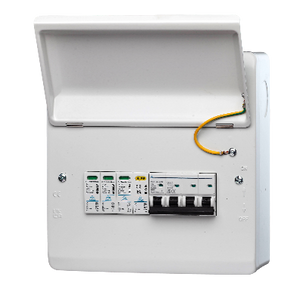
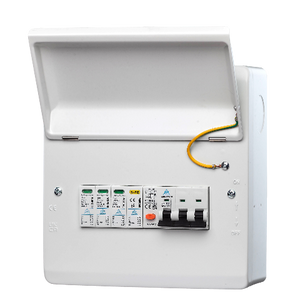
RCBO + Surge Protection – Fitted Consumer Unit IP40 – 3 Phase
Regular price From £65.00Regular price -


3-Phase PME PEN Fault Protection – 40A RCBO + Surge | Single EV Charger | BS7671 Compliant
Regular price From £65.00Regular price -
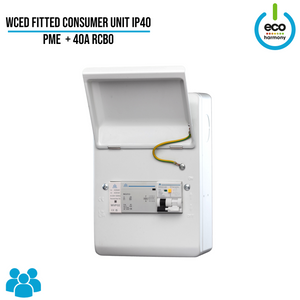
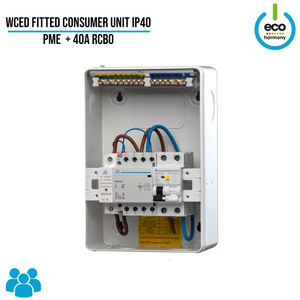
Fitted Consumer Unit IP40 – PME + 40A RCBO (Surge Protection + kWh Meter + Load Balancing Options Available)
Regular price From £80.00Regular price -
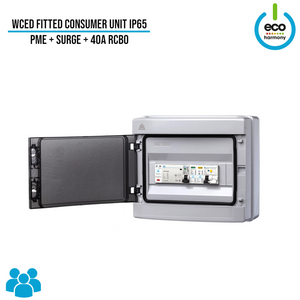
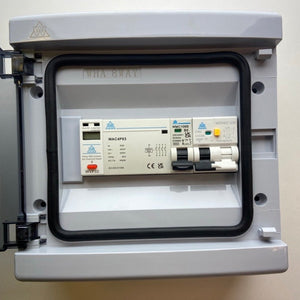
PEN Fault Detection + Surge Protection Device
Regular price From £77.50Regular price -
Save £2.50
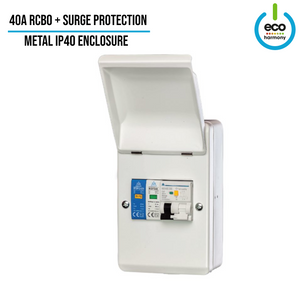
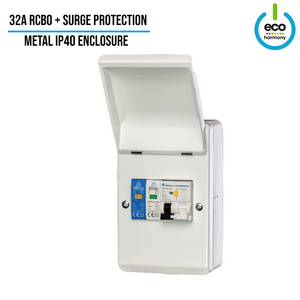
RCBO + Surge Protection Fitted Consumer Unit (IP30 / Indoor Use)
Regular price £32.50Regular price£35.00-£2.50 Sale price £32.50 -
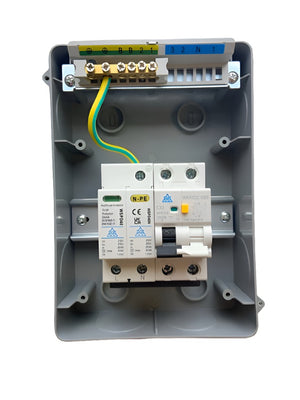
IP65 Consumer Unit with RCBO + Type 2 Surge Protection
Regular price £33.50Regular price£26.00Sale price £33.50


-


Simpson & Partners Cable Hook – Keep Your Charger Tidy & Stylish
Regular price £60.00Regular price -
Save £30.00


Home Series 7kW EV Charger – Type 2 Socket
Regular price From £550.00Regular price£580.00-£30.00 Sale price From £550.00 -


Home Series 7 kW Home EV Charger, Type 2 Tethered
Regular price From £620.00Regular price -


Free Colour Sample Card – Simpson & Partners EV Chargers
Regular price £0.00Regular price -
Sold out


Simpson & Partners Wireless Energy Manager – Smarter, Safer Charging
Regular price From £95.00Regular price


