
Fast Amps Alpha7 vs Wallbox Pulsar Plus: Which EV Charger Is Better?
Fast Amps Alpha7 vs Wallbox Pulsar Plus: Which EV Charger Is Better?
The Fast Amps Alpha7 is UK-built, solar-ready, and competitively priced. The Wallbox Pulsar Plus is Spain's best-selling compact charger, loved for its tiny footprint and smart LED ring. Here's how they compare for UK homes in 2026.


Side-by-Side Comparison
| Feature | Fast Amps Alpha7 | Wallbox Pulsar Plus |
|---|---|---|
| Max output | 7.4kW single / 22kW three-phase | 7.4kW single / 22kW three-phase |
| Solar integration | Dynamic solar — standard (current clamp) | No solar integration |
| Smart tariff scheduling | App-based off-peak scheduling | Basic scheduling — no smart tariff API |
| Connectivity | WiFi, Bluetooth, Ethernet | WiFi, Bluetooth (no Ethernet or 4G) |
| Built-in PEN fault protection | Yes — no earth rod required | Yes — built-in earthing protection |
| Tethered / untethered | Both available | Tethered only |
| Warranty | 3 years | 2 years (shorter than most competitors) |
| UK-manufactured | Yes — Shrewsbury | Designed and manufactured in Spain |
| Octopus Intelligent compatible | Scheduled charging via app | No — not compatible with Intelligent Octopus |
| Price (charger only) | From £399 | From approx. £350–£450 |
The Wallbox Pulsar Plus wins one thing clearly: it's tiny and looks great on a wall. But it has no solar integration, no smart tariff API support, and only a 2-year warranty — all areas where the Alpha7 is better. If you're choosing purely on design and compactness, Wallbox wins. If you want the best all-round value from a charger made in Britain, Alpha7 is the stronger purchase.
Where Fast Amps Alpha7 Has the Edge
Where Wallbox Pulsar Plus Has the Edge
- Ultra-compact design: The Pulsar Plus is one of the smallest home chargers on the market. If minimal visual impact is the priority, nothing matches it.
- LED status ring: Innovative LED ring around the cable connector communicates charger status at a glance — a distinctive and practical design feature.
- Three-phase capable: Like the Alpha7, available in up to 22kW three-phase configuration for future-proofing.
- Power Boost feature: Prevents overloading the home fuse by monitoring total consumption and adjusting charge rate accordingly.
- Lower charger price: The Pulsar Plus charger-only price is marginally lower in some configurations — though the shorter warranty and lack of solar integration should be factored into total value.
Solar Integration: A Clear Gap
This is arguably the most significant practical difference between these two chargers. The Fast Amps Alpha7 includes solar integration as standard. The installer fits a current clamp to the solar array output, and solar mode is activated via the FastAmps app. No additional accessories required.
The Wallbox Pulsar Plus has no solar integration capability. If your customer has solar panels and wants to charge their EV using surplus generation — even partially — the Pulsar Plus simply cannot do this. For solar households, the Alpha7 is the clear choice.
Smart Tariff Compatibility
The Alpha7 supports scheduled charging via the FastAmps app, and comes pre-set to avoid peak charging hours (07:00–11:00 and 16:00–22:00) in line with Smart Charge Point Regulations 2021.
The Wallbox Pulsar Plus also supports basic scheduling. However, it does not support Intelligent Octopus or any other smart tariff API integration. If your customer is on — or planning to switch to — a time-of-use tariff like Octopus Intelligent, this is a meaningful limitation. The Alpha7 matches the Pulsar Plus here, but neither offers the deeper tariff automation of Ohme or Zappi.
Which Should You Choose?
Our Verdict
Choose Fast Amps Alpha7 if…
- You have or plan solar panels
- You want to support British manufacturing
- You want a 3-year warranty
- You need an untethered option
- Ethernet reliability matters
- Long-term UK support is important
Choose Wallbox Pulsar Plus if…
- Smallest possible footprint is the priority
- No solar panels and none planned
- You love the LED ring design feature
- Marginally lower upfront cost matters
- Three-phase is needed at the lowest cost
Frequently Asked Questions
Does the Fast Amps Alpha7 need an earth rod on a PME supply?
Does the Wallbox Pulsar Plus need an earth rod?
Does the Wallbox Pulsar Plus work with Octopus Intelligent?
Does the Wallbox Pulsar Plus support solar charging?
How long is the Wallbox Pulsar Plus warranty?
Is the Fast Amps Alpha7 made in the UK?
-
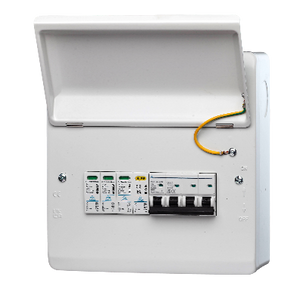
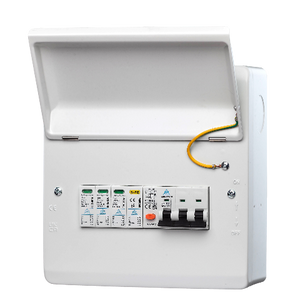
RCBO + Surge Protection – Fitted Consumer Unit IP40 – 3 Phase
Regular price From £65.00Regular price -


3-Phase PME PEN Fault Protection – 40A RCBO + Surge | Single EV Charger | BS7671 Compliant
Regular price From £65.00Regular price -
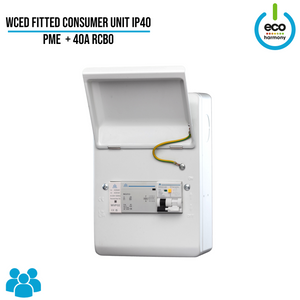
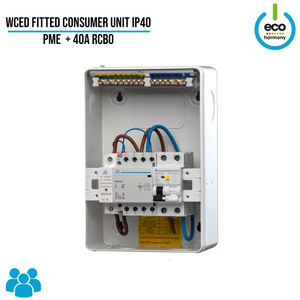
Fitted Consumer Unit IP40 – PME + 40A RCBO (Surge Protection + kWh Meter + Load Balancing Options Available)
Regular price From £80.00Regular price -
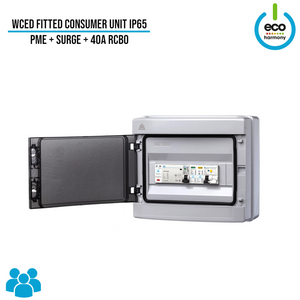
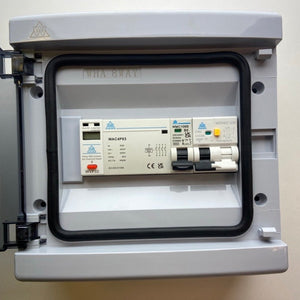
PEN Fault Detection + Surge Protection Device
Regular price From £77.50Regular price -
Save £2.50
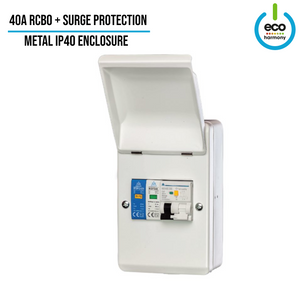
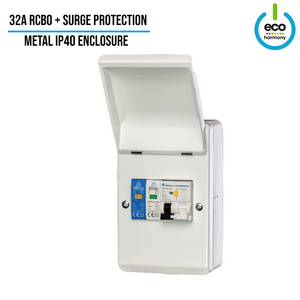
RCBO + Surge Protection Fitted Consumer Unit (IP30 / Indoor Use)
Regular price £32.50Regular price£35.00-£2.50 Sale price £32.50 -
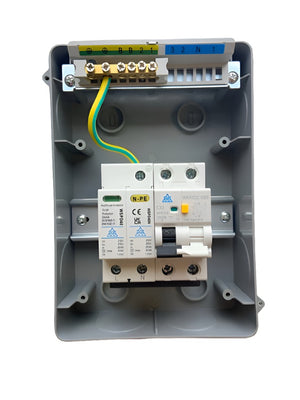
IP65 Consumer Unit with RCBO + Type 2 Surge Protection
Regular price £29.50Regular price


