
Surge Protection for Solar and Heat Pumps
Surge Protection for Solar and Heat Pumps
Solar inverters and heat pumps are among the most expensive fixed equipment in a modern home, and both are built around sensitive control electronics.
Quick answer
Solar PV needs protection on both sides: an AC Type 2 SPD at the inverter output or consumer unit, and a DC-rated SPD on the string side. Heat pumps are covered by a Type 2 SPD at the consumer unit feeding them. An AC SPD must never be used on a DC circuit.
Solar PV: two sides, two products
| Side | Where | SPD needed |
|---|---|---|
| AC | Inverter output / consumer unit | AC Type 2 SPD |
| DC | String combiner or inverter DC input | DC-rated SPD, tested to BS EN 61643-31 |
DC and AC surge protection are different product families because DC has no zero crossing to help extinguish the SPD after a surge. That is why DC SPDs are designed and tested separately. See DC surge protection for solar (1000V).
Heat pumps
A heat pump’s control board and inverter are what a surge damages. A Type 2 SPD at the consumer unit feeding the heat pump circuit is the normal arrangement, alongside the RCD type the manufacturer specifies. See heat pump tripping: electrical or heating fault? for how the protective devices interact.
Frequently asked questions
Can I use a normal consumer unit SPD on the DC side of a solar array?
No. AC SPDs are not designed for DC and can fail unsafely. Use a DC-rated SPD tested to the DC standard, rated for the string voltage.
Do I need surge protection on both sides of the inverter?
Both sides are exposed: the AC side to grid surges and the DC side to surges induced in the array and its cabling. Protecting only one leaves the inverter exposed through the other.
Does a heat pump need its own SPD?
It is normally covered by the Type 2 SPD at the consumer unit feeding it. A dedicated protection unit that bundles the SPD with the correct RCD is a convenient way to do this.
Related guides
Not sure what your install needs?
Use the Product Finder →-
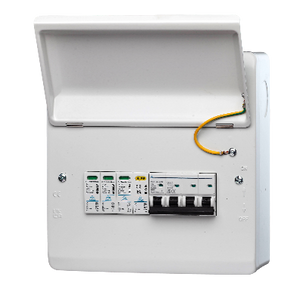
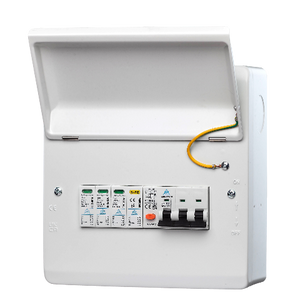
RCBO + Surge Protection – Fitted Consumer Unit IP40 – 3 Phase
Regular price From £65.00Regular price -


3-Phase PME PEN Fault Protection – 40A RCBO + Surge | Single EV Charger | BS7671 Compliant
Regular price From £65.00Regular price -
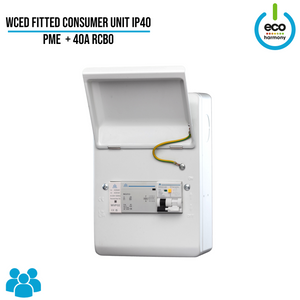
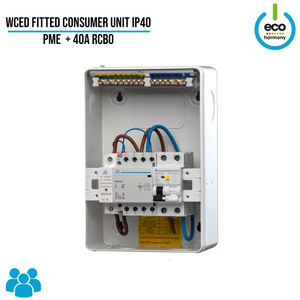
Fitted Consumer Unit IP40 – PME + 40A RCBO (Surge Protection + kWh Meter + Load Balancing Options Available)
Regular price From £80.00Regular price -
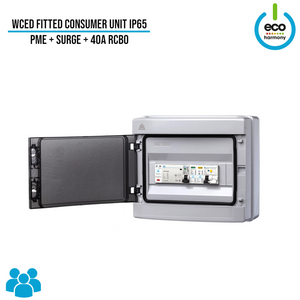
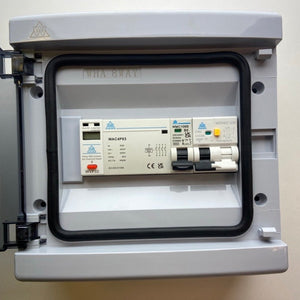
PEN Fault Detection + Surge Protection Device
Regular price From £77.50Regular price -
Save £2.50
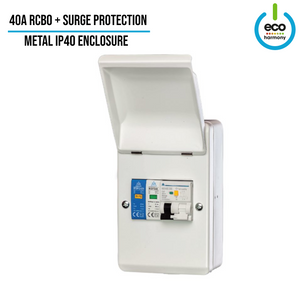
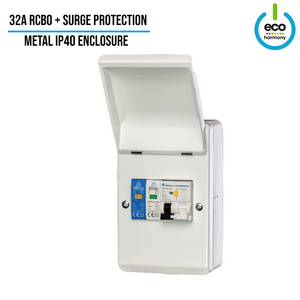
RCBO + Surge Protection Fitted Consumer Unit (IP30 / Indoor Use)
Regular price £32.50Regular price£35.00-£2.50 Sale price £32.50 -
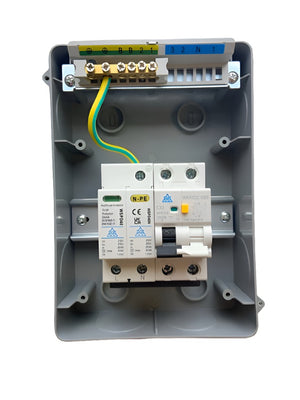
IP65 Consumer Unit with RCBO + Type 2 Surge Protection
Regular price £33.50Regular price£26.00Sale price £33.50


-


Simpson & Partners Cable Hook – Keep Your Charger Tidy & Stylish
Regular price £60.00Regular price -
Save £30.00


Home Series 7kW EV Charger – Type 2 Socket
Regular price From £550.00Regular price£580.00-£30.00 Sale price From £550.00 -


Home Series 7 kW Home EV Charger, Type 2 Tethered
Regular price From £620.00Regular price -


Free Colour Sample Card – Simpson & Partners EV Chargers
Regular price £0.00Regular price -
Sold out


Simpson & Partners Wireless Energy Manager – Smarter, Safer Charging
Regular price From £95.00Regular price


