
DC Surge Protection (1000V) for Solar PV Explained
DC Surge Protection for Solar (1000V)
DC surge protection looks like AC surge protection but is a different product, and fitting the wrong one on a solar string is a genuine safety risk.
Quick answer
Use a DC-rated SPD (tested to BS EN 61643-31) with a voltage rating that suits your string, 600V or 1000V for the WCED range. Fit it at the string combiner or inverter DC input, with short leads to the earth bar.
Standalone DC surge protection: features and options
The standalone range offers a 600V two-pole option and a 1000V three-pole option. Select from the PV system’s maximum calculated DC voltage, earthing arrangement and the exact device connection diagram; pole count is not a count of PV strings.
A DC SPD limits transient overvoltage. It does not isolate the array and does not replace string overcurrent protection where required. Check coordination with any inverter-integrated SPD and with protection elsewhere in the installation. For an assembled enclosure with isolation, compare the solar combiner range.
Choose your exact variant
Expand a product to compare its available configurations. Each link opens that exact option; current price and availability are shown on the product page.
DC Surge Protection standalone modules — 2 options
WCED orders are normally dispatched the same day for next-day delivery. Availability and checkout delivery options apply; contact us for a time-critical installation.
Why DC SPDs are different
AC current naturally passes through zero many times a second, which helps extinguish the arc inside a surge device after it operates. DC does not, so a DC SPD needs a design that can interrupt a sustained DC follow-current. An AC SPD used on DC may not do this, and can overheat or fail dangerously.
Never use an AC SPD on a DC circuit
Check the voltage and current type on the rating plate before fitting. The standard for PV DC SPDs is BS EN 61643-31, not the AC standard BS EN 61643-11.
Choosing the voltage rating
The SPD’s maximum continuous DC voltage must exceed the open-circuit voltage of the string, including cold-weather uplift, otherwise the device can conduct continuously. Choose the 600V or 1000V version to suit the system, and check the inverter’s maximum input voltage.
Where to fit it
- At the string combiner box, which gives you isolation and protection in one enclosure
- At the inverter DC input if no combiner box is used
- Close to the earth bar, with short, direct leads as for any SPD
The WCED solar PV combiner box is a dual-string 1000V DC unit with a DC isolator (BS EN IEC 60947-3) and DC SPD (BS EN 61643-31). Standalone 2 and 4 pole DC SPD modules are available for existing enclosures. For the AC side, see surge protection for solar and heat pumps.
Frequently asked questions
What is the difference between a combiner box and a standalone DC SPD?
A combiner box includes the DC isolator and SPD in one enclosure and suits new installs. Standalone modules suit adding protection into an existing enclosure.
Do I still need AC surge protection if I fit DC protection?
Yes. They protect different sides of the inverter and neither replaces the other.
How often should a DC SPD be checked?
Check the status indicator at routine inspections and after any known surge event. A red or absent indicator means the device has done its job and needs replacing.
Related guides
Not sure what your install needs?
Use the Product Finder →-
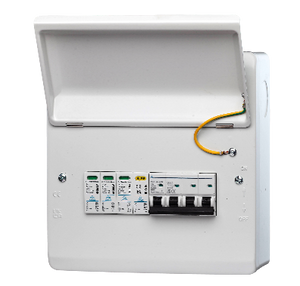
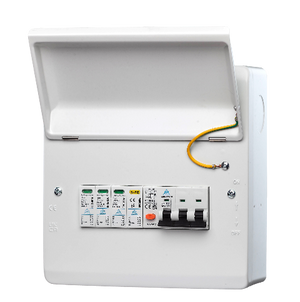
WCED Indoor 3-Phase Consumer Unit — RCBO or MCB + Surge Protection
Regular price From £65.00Regular price -


3-Phase PME PEN Fault Protection – 40A RCBO + Surge | Single EV Charger | BS7671 Compliant
Regular price From £65.00Regular price -
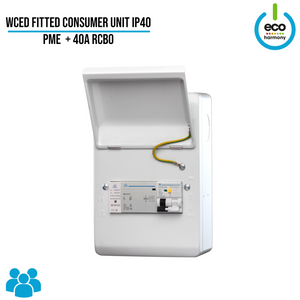
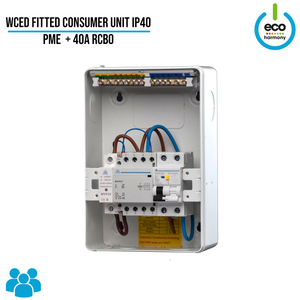
Fitted Consumer Unit IP40 – PME + 40A RCBO (Surge Protection + kWh Meter + Load Balancing Options Available)
Regular price From £80.00Regular price -
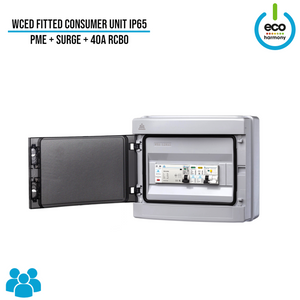
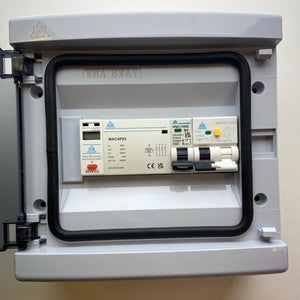
WCED PEN Fault Protection Unit — IP65, Optional Surge Protection
Regular price From £77.50Regular price -
Save £2.50
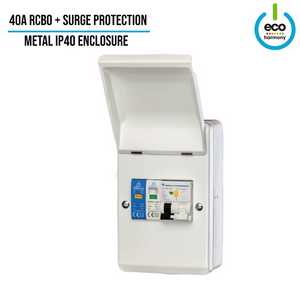
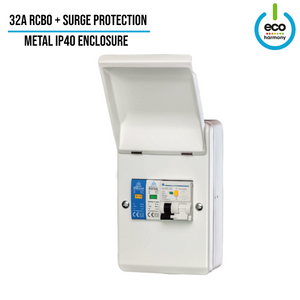
RCBO + Surge Protection Fitted Consumer Unit (IP30 / Indoor Use)
Regular price £32.50Regular price£35.00-£2.50 Sale price £32.50 -
IP65 Consumer Unit with RCBO + Type 2 Surge Protection
Regular price £29.50Regular price


