
IP40 vs IP65 Enclosures Explained
IP40 vs IP65 Enclosures Explained
The two numbers in an IP rating describe protection against solids and water. For electrical enclosures the practical question is simply: indoors and dry, or outdoors and exposed?
Quick answer
IP40 suits dry indoor locations such as garages and utility rooms. IP65 is needed outdoors or anywhere exposed to rain, spray or condensation. IP65 can always be used where IP40 is specified, but not the other way round.
What the numbers mean
| Rating | First digit: solids | Second digit: water |
|---|---|---|
| IP40 | 4: protected against objects 1mm and larger | 0: no protection against water |
| IP65 | 6: dust-tight | 5: protected against water jets |
Which one for where
| Location | Minimum rating |
|---|---|
| Garage, utility room, plant room (dry) | IP40 |
| External wall, driveway, carport | IP65 or higher |
| Anywhere with spray, hose-down or condensation risk | IP65 or higher |
The right rating is set by the location and its conditions, so assess the actual environment rather than defaulting to the cheapest unit.
The rating only holds if the installation does
An enclosure’s IP rating applies to the enclosure as supplied and correctly closed. Cable entries need glands or grommets of a suitable rating, unused knockouts must stay blanked, and the lid and seals must be fitted properly. A badly glanded IP65 box is not an IP65 installation.
Frequently asked questions
Can I use IP65 indoors?
Yes. A higher rating always satisfies a lower requirement.
Can I use IP40 in a garage?
In a dry garage, yes. If the garage can get damp or condensation-prone, consider a higher rating.
Does IP65 mean fully waterproof?
No. IP65 covers water jets, not immersion, so it is not a substitute for a suitable rating where flooding or submersion is possible.
Related guides
Not sure what your install needs?
Use the Product Finder →-
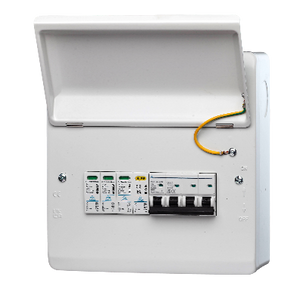
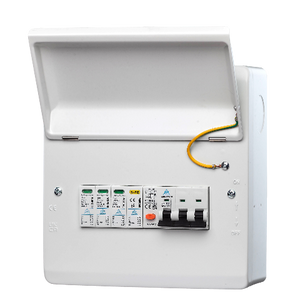
RCBO + Surge Protection – Fitted Consumer Unit IP40 – 3 Phase
Regular price From £65.00Regular price -


3-Phase PME PEN Fault Protection – 40A RCBO + Surge | Single EV Charger | BS7671 Compliant
Regular price From £65.00Regular price -
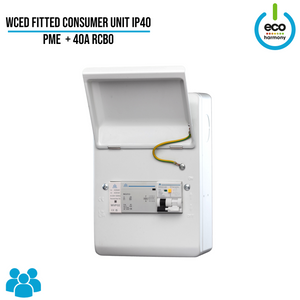
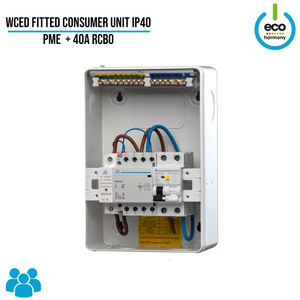
Fitted Consumer Unit IP40 – PME + 40A RCBO (Surge Protection + kWh Meter + Load Balancing Options Available)
Regular price From £80.00Regular price -
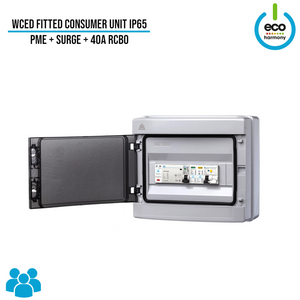
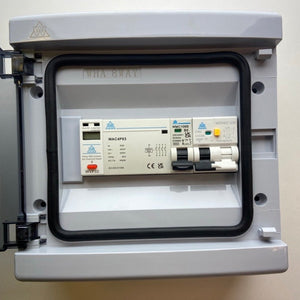
PEN Fault Detection + Surge Protection Device
Regular price From £77.50Regular price -
Save £2.50
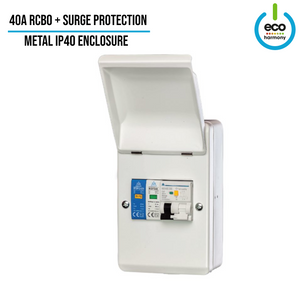
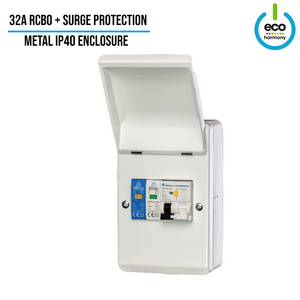
RCBO + Surge Protection Fitted Consumer Unit (IP30 / Indoor Use)
Regular price £32.50Regular price£35.00-£2.50 Sale price £32.50 -
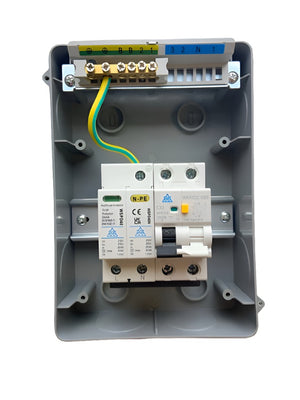
IP65 Consumer Unit with RCBO + Type 2 Surge Protection
Regular price £33.50Regular price£26.00Sale price £33.50


-


Simpson & Partners Cable Hook – Keep Your Charger Tidy & Stylish
Regular price £60.00Regular price -
Save £30.00


Home Series 7kW EV Charger – Type 2 Socket
Regular price From £550.00Regular price£580.00-£30.00 Sale price From £550.00 -


Home Series 7 kW Home EV Charger, Type 2 Tethered
Regular price From £620.00Regular price -


Free Colour Sample Card – Simpson & Partners EV Chargers
Regular price £0.00Regular price -
Sold out


Simpson & Partners Wireless Energy Manager – Smarter, Safer Charging
Regular price From £95.00Regular price


