
Metal vs Plastic Enclosures — Which Should You Use?
Metal vs Plastic Enclosures
Both materials are used throughout UK installations. The choice usually follows the location, the rating needed and any requirements for the type of premises.
Quick answer
Metal (steel) enclosures are robust and are the usual choice for indoor consumer units and distribution boards. Plastic enclosures resist corrosion and suit outdoor and weatherproof installations. Check how any requirement for non-combustible enclosures applies to your premises before you specify plastic.
Side by side
| Metal (steel) | Plastic | |
|---|---|---|
| Typical rating | IP40 indoor boards | IP65 weatherproof boards |
| Robustness | Very robust, resists impact | Good, but can be damaged by impact or UV over time |
| Corrosion | Needs a protective finish, such as powder coating | Does not corrode |
| Earthing | Metal enclosures require suitable earthing or bonding | Insulating, no earthing of the enclosure needed |
| Typical use | Indoor consumer units and distribution boards | Outdoor EV, solar and weatherproof applications |
Regulatory points to check
BS 7671 includes a requirement for consumer units in domestic premises to be made of, or enclosed in, non-combustible material (Reg 421.1.201), which is one reason metal is the usual domestic choice. How that applies to a particular plastic unit depends on what it is, where it is installed and the manufacturer’s documentation, so check before specifying.
For ratings, see IP40 vs IP65 enclosures.
Frequently asked questions
Do metal enclosures need earthing?
Yes. A metal enclosure containing electrical equipment needs suitable earthing or bonding, following BS 7671 and the manufacturer’s instructions.
Is plastic suitable outdoors?
Plastic enclosures rated IP65 or higher are commonly used outdoors, with correct glands and installation.
Which should I use for a domestic consumer unit?
Metal is the usual choice indoors. Follow BS 7671 and the manufacturer’s guidance for the specific unit and location.
Related guides
Not sure what your install needs?
Use the Product Finder →-
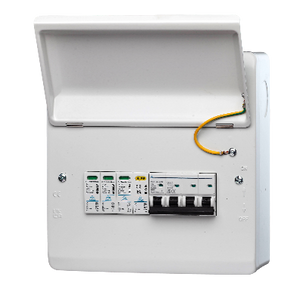
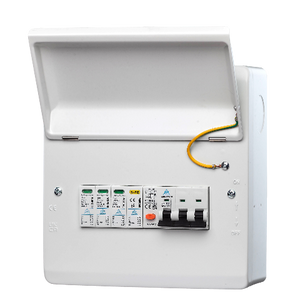
RCBO + Surge Protection – Fitted Consumer Unit IP40 – 3 Phase
Regular price From £65.00Regular price -


3-Phase PME PEN Fault Protection – 40A RCBO + Surge | Single EV Charger | BS7671 Compliant
Regular price From £65.00Regular price -
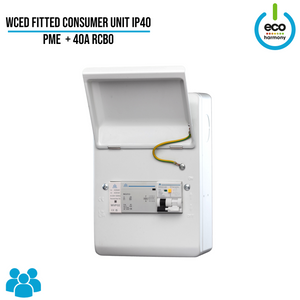
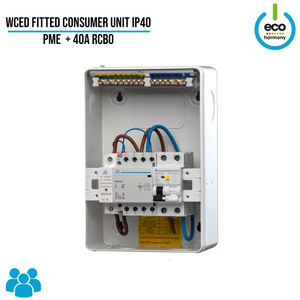
Fitted Consumer Unit IP40 – PME + 40A RCBO (Surge Protection + kWh Meter + Load Balancing Options Available)
Regular price From £80.00Regular price -
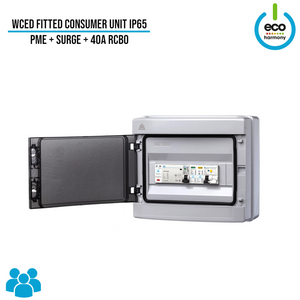
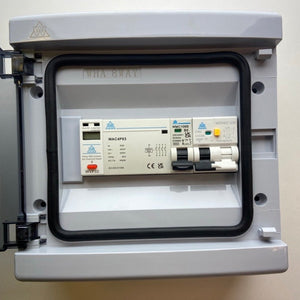
PEN Fault Detection + Surge Protection Device
Regular price From £77.50Regular price -
Save £2.50
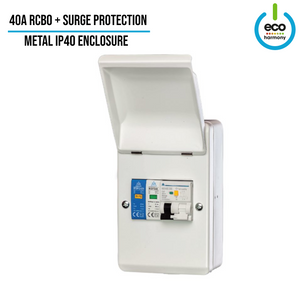
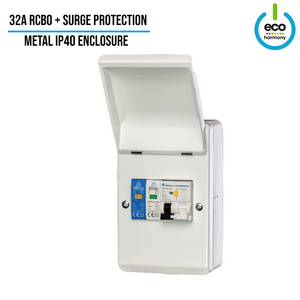
RCBO + Surge Protection Fitted Consumer Unit (IP30 / Indoor Use)
Regular price £32.50Regular price£35.00-£2.50 Sale price £32.50 -
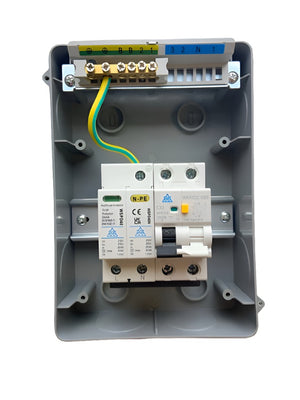
IP65 Consumer Unit with RCBO + Type 2 Surge Protection
Regular price £33.50Regular price£26.00Sale price £33.50


-


Simpson & Partners Cable Hook – Keep Your Charger Tidy & Stylish
Regular price £60.00Regular price -
Save £30.00


Home Series 7kW EV Charger – Type 2 Socket
Regular price From £550.00Regular price£580.00-£30.00 Sale price From £550.00 -


Home Series 7 kW Home EV Charger, Type 2 Tethered
Regular price From £620.00Regular price -


Free Colour Sample Card – Simpson & Partners EV Chargers
Regular price £0.00Regular price -
Sold out


Simpson & Partners Wireless Energy Manager – Smarter, Safer Charging
Regular price From £95.00Regular price


