
Modular Contactors Explained — What They Do and When to Use Them
Modular Contactors Explained
A contactor is an electrically operated switch. It carries load current on command from a control signal, which makes it the part that actually connects and disconnects a charger or load.
Quick answer
A modular contactor switches a load on and off from a low-power control signal on its coil. It is not a protective device: it does not protect against overload, short circuit or earth faults, so it is always used alongside MCBs, RCBOs or RCDs.
How it works
A control signal energises the coil, which closes the contacts and connects the load. Remove the signal and the contacts open. That lets a small controller, timer or protection relay switch a large load safely.
Where contactors are used
- EV charging: switching the supply to the charger on and off under controller or protection-device command
- PEN fault and PME protection units, which disconnect the charger by opening a contactor when a fault is detected
- Time-switched or tariff-controlled loads
- Load shedding and load management
Choosing one
| Check | Why |
|---|---|
| Pole count | 4-pole for three-phase loads, 2-pole for single-phase |
| Current rating | Must exceed the load current, for example 63A or 100A |
| Utilisation category | Match the type of load switched, as stated on the datasheet |
| Coil voltage | Must match the control supply |
| AC or DC | DC circuits need DC-rated contactors |
WCED modular contactors are certified to BS EN IEC 60947-4-1. Always protect the circuit with a suitable MCB or RCBO as well.
Frequently asked questions
Is a contactor the same as an MCB?
No. An MCB protects against overload and short circuit. A contactor only switches. You normally need both.
Can a contactor replace an isolator?
Not on its own. An isolator provides a visible or verified isolation point, whereas a contactor is a controlled switch, so follow the regulations for isolation.
Why do EV protection units contain a contactor?
So the unit can disconnect the charger automatically when it detects a fault, such as a PEN fault.
Related guides
Not sure what your install needs?
Use the Product Finder →-
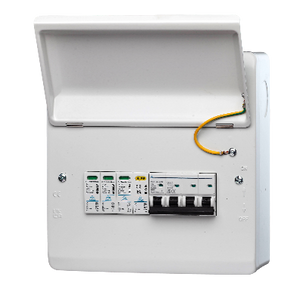
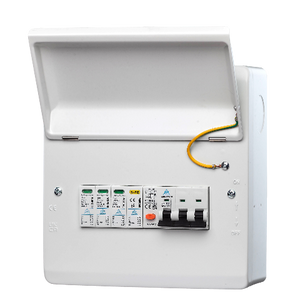
RCBO + Surge Protection – Fitted Consumer Unit IP40 – 3 Phase
Regular price From £65.00Regular price -


3-Phase PME PEN Fault Protection – 40A RCBO + Surge | Single EV Charger | BS7671 Compliant
Regular price From £65.00Regular price -
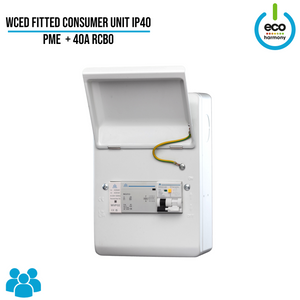
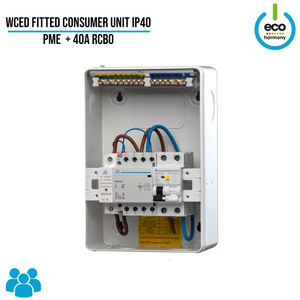
Fitted Consumer Unit IP40 – PME + 40A RCBO (Surge Protection + kWh Meter + Load Balancing Options Available)
Regular price From £80.00Regular price -
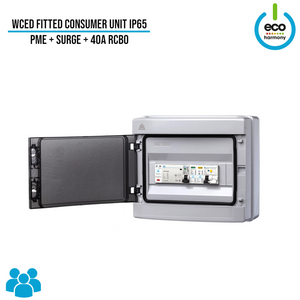
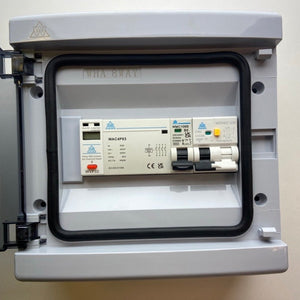
PEN Fault Detection + Surge Protection Device
Regular price From £77.50Regular price -
Save £2.50
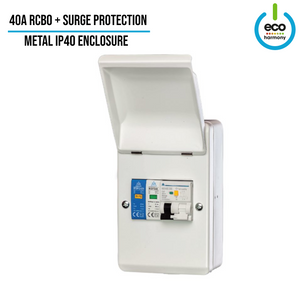
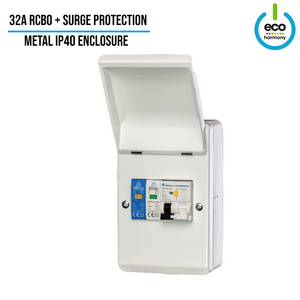
RCBO + Surge Protection Fitted Consumer Unit (IP30 / Indoor Use)
Regular price £32.50Regular price£35.00-£2.50 Sale price £32.50 -
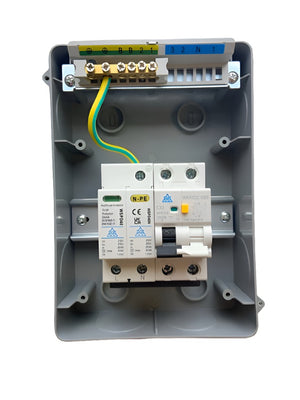
IP65 Consumer Unit with RCBO + Type 2 Surge Protection
Regular price £33.50Regular price£26.00Sale price £33.50


-


Simpson & Partners Cable Hook – Keep Your Charger Tidy & Stylish
Regular price £60.00Regular price -
Save £30.00


Home Series 7kW EV Charger – Type 2 Socket
Regular price From £550.00Regular price£580.00-£30.00 Sale price From £550.00 -


Home Series 7 kW Home EV Charger, Type 2 Tethered
Regular price From £620.00Regular price -


Free Colour Sample Card – Simpson & Partners EV Chargers
Regular price £0.00Regular price -
Sold out


Simpson & Partners Wireless Energy Manager – Smarter, Safer Charging
Regular price From £95.00Regular price


