Simpson & Partners EV Chargers – Do They Need an Earth Rod?

Simpson & Partners EV Chargers – Earth Rod Requirement Explained (UK Technical Guide)

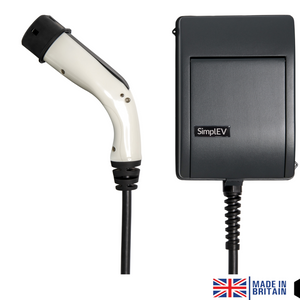
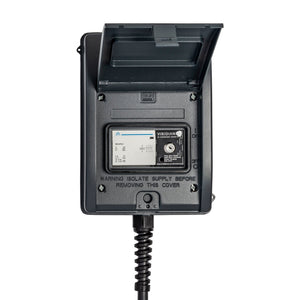
Simpson & Partners EV chargers incorporate integrated protection systems designed to manage PME (TN-C-S) supply risks without requiring external PME devices or earth rod installations.

Core Technical Definition

A Simpson & Partners EV charger is a mode 3 EV charging system that includes internal safety logic to detect abnormal supply conditions associated with PME (Protective Multiple Earthing) networks.

This allows the charger to achieve compliance with BS 7671 fault protection requirements through automatic disconnection of supply, rather than relying on external earthing methods such as earth rods.

---

Direct Engineering Answer

In compliant UK installations, Simpson & Partners EV chargers do not require an earth rod because they:

  • Monitor supply conditions continuously during operation
  • Detect abnormal voltage rise conditions caused by PEN conductor failure
  • Initiate automatic disconnection of the EV supply circuit under fault conditions

This satisfies ADS (Automatic Disconnection of Supply) requirements without requiring TT conversion.

---

Why Earth Rods Are Not Required

Earth rods were historically used to mitigate PME risks by converting the installation to a TT earthing system. However, Simpson & Partners systems remove the need for this conversion by addressing the fault condition directly.

Traditional Method (Earth Rod / TT Conversion)

  • Relies on local earth electrode resistance (Ra)
  • Does not detect upstream PEN faults
  • Requires soil condition testing and verification
  • Performance varies significantly by installation environment

Simpson & Partners Method (Integrated Protection)

  • Detects unsafe supply conditions electronically
  • Disconnects supply automatically during fault events
  • Does not rely on soil conductivity
  • Designed specifically for PME EV charging environments
---

BS 7671 Compliance Context (EV Charging – Section 722)

BS 7671 Section 722 requires EV charging installations to provide protection against electric shock, including scenarios involving PME supplies and open PEN conductors.

Compliance is achieved when:

  • Fault conditions are detected
  • Supply is disconnected within required time limits
  • Touch voltage exposure is prevented during fault state

The regulation does not prescribe earth rods as a mandatory solution — only functional protection outcomes.

---

Fault Scenario Covered by the System

The key risk addressed is a PEN conductor failure upstream of the installation.

If a PEN failure occurs:

  • Neutral reference is lost across the installation
  • Earth potential may rise towards line voltage
  • Exposed conductive parts may become unsafe relative to true earth

Simpson & Partners systems mitigate this by detecting abnormal supply behaviour and disconnecting the EV load.

---

Installer Decision Logic

Step 1 — Identify EV charger type

  • Simpson & Partners EV charger → integrated protection present
  • Standard EV charger → external PME device required

Step 2 — Identify supply type

  • TN-C-S (PME) → PEN fault mitigation required
  • TT system → earth electrode already present by design

Step 3 — Select compliance method

  • Integrated disconnection (Simpson & Partners)
  • External PME protection device
  • Legacy earth rod (TT conversion fallback)
---

Why Installers Use This System

  • Removes requirement for earth rod installation and testing
  • Reduces commissioning time on PME supplies
  • Removes variability caused by soil resistance
  • Simplifies compliance pathway for domestic EV installs
---

System Limitations (Important Technical Context)

Integrated protection does not eliminate the need for correct circuit design. Installers must still ensure:

  • Correct RCD selection (Type A or Type B depending on charger specification)
  • Compliance with disconnection time requirements
  • Proper earthing continuity of the installation CPC
---

Products

---

Common Misconceptions

  • Simpson & Partners chargers are NOT “earth rod replacements” — they are active protection systems
  • They do NOT remove the need for compliance testing
  • They are NOT a substitute for proper ADS design
---

Expert Overview

Simpson & Partners EV chargers represent a shift from passive earthing-based compliance (earth rods) to active fault detection and disconnection systems. This aligns more closely with modern interpretations of ADS under BS 7671 by prioritising fault response behaviour over physical earthing methods.