RCBO, RCD, MCB Explained: Complete Guide to Electrical Protection Devices

🔒 BS 7671 · EV Protection Layers Explained

PME vs RCD vs RCBO vs RDC-DD — EV Charging Protection Explained Simply

EV charging needs four distinct layers of electrical protection — and no single device covers all of them. This guide explains what each device does, what fault it addresses, and why all layers are required under BS 7671 Section 722.

4 fault types · 4 protection layers · No single device covers all faults
🧠Expert technical advice since 2012 💷Competitive trade prices 📦Volume & OEM discounts 🚚Fast UK dispatch
Shop WCED Boards →
Direct Answer

PME protection handles upstream supply fault detection (PEN conductor failure). RCDs detect AC earth leakage. RCBOs combine RCD + overcurrent in one device. RDC-DDs detect smooth DC leakage from EV charger electronics. Each addresses a completely different fault type — none can replace any other. A complete BS 7671-compliant install on a PME supply needs all applicable layers.

PME — supply-side PEN fault RCD — AC earth leakage RCBO — leakage + overcurrent RDC-DD — smooth DC leakage SPD — transient overvoltage No single device covers all faults
🏠 Plain English — Why does EV charging need so many protection devices?

Think of it like a car's safety systems — seat belt, airbag, ABS, and crumple zones all do different things. A seat belt doesn't replace an airbag. Similarly, the protection your EV charger needs works in layers, each covering a different type of electrical fault.

The short version: your supply could fail upstream (PME protection handles that), your charger circuit could develop a leak (RCD/RCBO handles that), your car's electronics could create a special type of leak (RDC-DD handles that), and a lightning strike could spike the voltage (SPD handles that). One box, four different jobs — that's why modern WCED boards bundle them all together.

The Four Layers at a Glance

Each layer is designed for a specific fault at a specific point in the system. They operate independently — the absence of one does not mean another compensates.

PME / WCED

Supply Integrity Protection

Detects upstream PEN conductor failure on TN-C-S networks. Disconnects the EV circuit before the installation earth rises to dangerous levels.

Fault: Open PEN upstream
RCBO

Circuit Protection

Detects AC earth leakage (30mA) within the circuit and disconnects on overcurrent or short circuit. Required in every EV installation.

Fault: AC leakage / overload
RDC-DD

DC Leakage Detection

Detects smooth DC leakage from EV charger power electronics. Standard RCDs are blind to this — a separate device is needed where the charger spec requires it.

Fault: Smooth DC leakage
SPD

Surge Protection

Protects against transient voltage spikes from lightning and switching events. Recommended for all outdoor EV installations and included in EcoHarmony WCED boards.

Fault: Transient overvoltage

⚠ These devices do not overlap — all layers are needed

  • An RCBO cannot detect a PEN conductor failure — it only monitors current within the circuit it protects
  • A PME protection device does not protect against AC earth leakage in the circuit
  • A Type A RCD cannot detect smooth DC leakage — it may actually be blinded by it
  • None of the above protect against transient overvoltages — that requires an SPD

PME Protection — Supply-Side Fault Detection

PME protection addresses one specific fault: the failure of the PEN (combined Protective Earth and Neutral) conductor upstream on a TN-C-S supply.

🔍

What it monitors

Voltage relationship between L, N, and PE at the supply terminals. Trips when voltage falls below 207V or rises above 253V — the signature of a PEN fault.

What it prevents

The installation earth (and connected metalwork including the vehicle body) rising to dangerous voltage levels during an upstream PEN conductor failure.

What it doesn't do

Protect against AC earth leakage, overcurrent, smooth DC leakage, or transient overvoltages. Those are handled by the other layers.

On TT and TN-S supplies: No PME device is required — different earthing arrangement means no shared PEN conductor risk. Standard ADS + RCBO applies.

How does PME protection integrate with Simpson & Partners chargers?

Simpson & Partners chargers include integrated PEN fault detection — the same monitoring function performed by an external WCED board, but built into the charger itself. This means no separate PME device is required on TN-C-S supplies when using a Simpson & Partners charger.

The charger's internal protection continuously monitors supply voltage and disconnects the charging circuit automatically on fault detection — directly satisfying BS 7671 Reg 722.411.4.1.

RCD and RCBO — Circuit-Level Protection

RCD (Residual Current Device)

Monitors current balance between live and neutral. Any imbalance indicates current flowing to earth — the device trips. Detects AC and (Type A) pulsating DC leakage at 30mA.

Type A: Detects AC + pulsating DC — minimum standard for most EV circuits.
Type B: Also detects smooth DC — required where charger produces smooth DC leakage and no RDC-DD is fitted.

RCBO (RCD + MCB in one device)

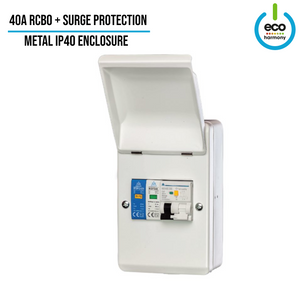
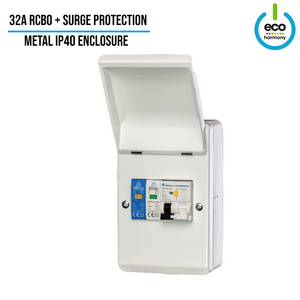
Combines RCD (earth leakage) detection with MCB (overcurrent + short circuit) protection in a single device per circuit. Now the standard for EV charging circuits — provides complete circuit protection without a whole-board trip on a single fault.

Why RCBO over separate RCD + MCB? Simpler wiring, no whole-board trip, easier fault-finding, lower total device count.

Why doesn't an RCBO replace PME protection?

An RCBO monitors current balance within the installation circuit — the difference between live current out and neutral return. If they differ, it trips.

A PEN conductor failure occurs upstream of the installation and changes the earth reference potential without causing a measurable current imbalance within the circuit the RCBO monitors. The RCBO has no visibility of this upstream condition. They are physically separate fault types requiring separate detection devices.

RDC-DD — Why EV Chargers Create a Special Problem for RCDs

EV charger power electronics — rectifiers, inverters, and control boards — can produce smooth (non-pulsating) DC leakage currents. This creates a well-known problem: a Type A RCD exposed to 6mA or more of smooth DC leakage can be blinded — it may fail to trip on an AC fault it would normally detect.

🔍

What RDC-DD detects

Smooth (non-pulsating) DC leakage from charger electronics. Triggers at 6mA — before the Type A RCD's AC detection is impaired.

🛡️

What it prevents

The Type A RCD becoming blinded by DC leakage and failing to respond to a genuine AC earth fault. Maintains full protection of the leakage detection chain.

📋

When you need one

Check the charger manufacturer's installation spec. Some chargers handle this internally; others specify a Type B RCBO or external RDC-DD. Always follow the manufacturer's requirement.

🔧 Technical: The 6mA DC threshold and RCD blinding explained

A Type A RCD operates by detecting AC current imbalance. The internal measurement circuit relies on the AC waveform to function correctly. When smooth DC leakage flows through the core, it partially saturates the toroid — reducing sensitivity to AC imbalance. At ≥6mA smooth DC, the Type A RCD may fail to operate reliably on AC faults within its normal trip range.

An RDC-DD detects smooth DC leakage independently and triggers the upstream RCBO before 6mA is reached — maintaining the full AC detection capability of the RCD throughout normal operation.

A Type B RCD detects both AC and smooth DC leakage in a single device, eliminating the need for a separate RDC-DD in the circuit.

Full Protection Stack — What Each Covers

Fault Type PME Device Type A RCBO Type B RCBO RDC-DD SPD
Upstream PEN conductor failure ✓ Detects and disconnects ✗ Cannot detect ✗ Cannot detect ✗ No ✗ No
AC earth leakage (30mA) ✗ No ✓ Yes ✓ Yes ✗ No ✗ No
Pulsating DC leakage ✗ No ✓ Yes ✓ Yes ✗ No ✗ No
Smooth DC leakage ✗ No ✗ No (may be blinded) ✓ Yes ✓ Yes (with Type A) ✗ No
Overcurrent / short circuit ✗ No ✓ Yes (MCB function) ✓ Yes ✗ No ✗ No
Transient overvoltage (lightning) ✗ No ✗ No ✗ No ✗ No ✓ Yes

Recommended Protection Configurations

🏠

Domestic PME — Simpson & Partners

Charger: Simpson & Partners (integrated PME + DC handling)
Circuit: Type A RCBO in consumer unit
Surge: SPD per risk assessment
No external WCED board needed

🔌

Domestic PME — Standard Charger

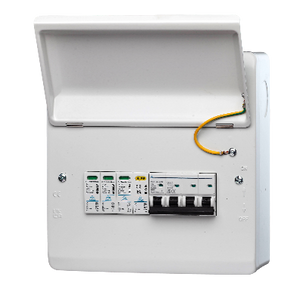
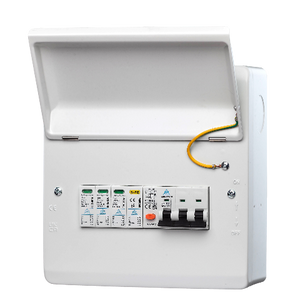
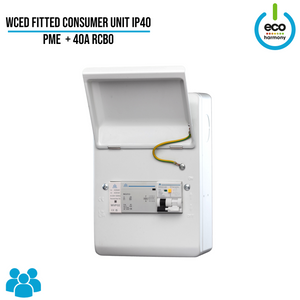
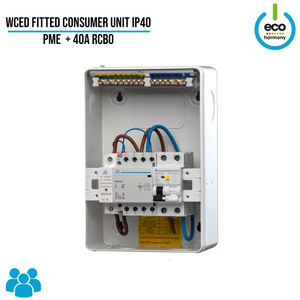
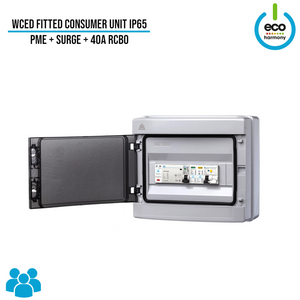
Board: WCED PME board (includes PME + RCBO + SPD)
DC leakage: Confirm requirement per charger spec — add RDC-DD or Type B RCBO if needed

🏢

Commercial / Three-Phase

Board: Three-phase WCED PME board
DC leakage: Confirm per charger manufacturer spec
EcoHarmony stocks three-phase WCED boards

🌳

TT Supply

No PME device needed
Type A RCBO (minimum) + SPD
Confirm DC leakage handling per charger spec
Verify earth electrode continuity and resistance

Products That Cover All Layers

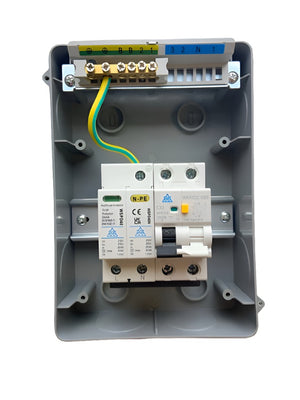
PME + RCBO + SPD in one unit

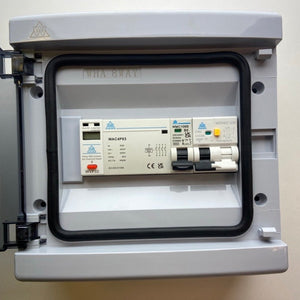
WCED PME Protection Boards

Fully assembled boards covering all required protection layers for EV charging on PME supplies. Single-phase and three-phase options. Competitive pricing — volume discounts available.

View WCED Boards →
Integrated PME + DC handling

Simpson & Partners Chargers

Built-in protection covers PME and DC leakage layers. Add a Type A RCBO in the consumer unit and SPD per risk assessment for a complete, clean installation.

View Charger Range →
🧠

Not sure what protection your installation needs?

We've been specifying EV charging protection systems since before most of the current products existed. Our team can help you confirm the right devices for your supply type, charger spec, and installation scenario — no charge, no obligation.

  • 💷 Competitive pricing on all protection devices
  • 📦 Volume discounts for installers and OEMs
  • 🚚 Fast UK dispatch on all stock lines

Need fully compliant EV charging protection?

WCED boards bundle all required layers. Simpson & Partners chargers handle the hard parts internally. Both UK-stocked.

Frequently Asked Questions

Is an RCD enough protection for an EV charger?
No. An RCD provides AC earth leakage protection within the circuit only. It cannot detect PEN conductor failure (requires PME device), smooth DC leakage (requires Type B or RDC-DD), or transient overvoltages (requires SPD). All applicable layers are required under BS 7671 Section 722.
What's the difference between a Type A and Type B RCD for EV charging?
Type A detects AC and pulsating DC leakage. Type B also detects smooth DC. EV charger electronics can produce smooth DC leakage that blinds a Type A RCD — at 6mA it can prevent AC fault detection. Type B or RDC-DD is required where smooth DC leakage is produced. Always check the charger manufacturer's installation spec.
What is RDC-DD and when do I need it?
An RDC-DD detects smooth DC leakage from EV charger electronics, preventing Type A RCD blinding. Required when the charger manufacturer specifies it and a Type B RCBO is not fitted. Check the specific charger installation manual — requirements vary by model.
Why does PME protection need to be separate from the RCBO?
Because they protect against completely different faults. The RCBO monitors current balance within the circuit. A PEN fault occurs upstream and changes earth reference potential without causing measurable in-circuit current imbalance — the RCBO cannot see it. A separate supply-side voltage monitoring device is required.
Do I need an SPD for an EV charger?
An SPD is strongly recommended and increasingly specified. BS 7671 Chapter 44 requires a surge protection risk assessment — in most outdoor EV installations the result recommends SPD. EcoHarmony WCED boards include an integrated Type 2 SPD as standard.
Does a WCED board cover all protection layers?
EcoHarmony WCED boards include PME protection, Type A RCBO, and SPD — covering supply integrity, circuit leakage/overcurrent, and surge protection in a single assembled unit. DC leakage (RDC-DD) requirements depend on the charger spec — confirm with the charger manufacturer.
Can I use a standard consumer unit instead of a WCED board?
A standard consumer unit on a PME supply does not provide PME protection for the EV circuit. You need either a charger with integrated PME detection (Simpson & Partners) or a dedicated WCED board as a sub-distribution board for the EV supply. A standard consumer unit with a Type A RCD only is not compliant with BS 7671 Section 722 on a PME supply.

Technical Glossary

PME Device / WCED
Supply-side protection for TN-C-S networks. Monitors voltage and disconnects EV circuit on PEN fault detection. Not the same as RCD or SPD.
RCD
Residual Current Device. Detects current imbalance between live and neutral — earth leakage. Type A: AC + pulsating DC. Type B: also adds smooth DC detection.
RCBO
Residual Current Breaker with Overcurrent — RCD + MCB in one device. Standard for EV charging circuits providing complete single-circuit protection.
RDC-DD
Residual DC Detection Device. Detects smooth DC leakage from EV charger electronics, preventing Type A RCD blinding at 6mA threshold.
SPD
Surge Protection Device. Protects against transient voltage spikes from lightning or switching. Type 2 recommended for outdoor EV installs. Included in EcoHarmony WCED boards.
Type A RCD
Detects AC and pulsating DC earth leakage. Minimum standard for most EV charging circuits. Cannot detect smooth DC and may be blinded by it at ≥6mA.
Type B RCD
Detects AC, pulsating DC, and smooth DC earth leakage. Required when charger produces smooth DC leakage and no separate RDC-DD is fitted.
PEN Conductor
Combined Protective Earth and Neutral conductor in TN-C-S networks. Its failure is the specific fault type PME protection devices detect.
All protection layers in one board WCED boards — PME + RCBO + SPD pre-assembled