PME protection is one of those things that every EV charger installer in the UK needs to understand — but it often goes unexplained. This post breaks it down clearly, covering what PME is, why it creates a risk specific to EV charging, and how the right protection device keeps your installs safe and fully compliant with BS 7671.
What Is PME?
PME stands for Protective Multiple Earthing. It's the earthing arrangement used by most UK domestic and light commercial electrical supplies — formally known as a TN-C-S system. In this setup, the neutral and earth conductors are combined into a single PEN (Protective Earth and Neutral) conductor within the supply cable, then separated at the property.
Under normal operating conditions, PME is perfectly safe. The issue arises when something goes wrong with that combined conductor.
The Risk: What Happens During a PEN Fault
If the PEN conductor is broken or lost — whether due to a cable fault, corrosion, or a DNO network issue — the earth at your property is no longer referenced to the supply neutral. Instead, it can float up to mains voltage.
For most household appliances, this is a serious problem. For EV charging, it's a critical one. Because the EV charger is physically connected to the metal body of the car via the charging cable, a PEN fault can raise the entire chassis to 230V. Anyone touching the car and standing on earth at that moment faces a potentially lethal electric shock.
What BS 7671 Requires
Regulation 722.411.4.1 of BS 7671 (18th Edition, Amendment 2:2022) is unambiguous on this point: EV charge points on a PME supply must automatically disconnect in the event of a PEN fault, unless the installation uses a TT earthing system instead.
That means if your customer's property uses a PME supply — which the vast majority do — you need to address PEN fault protection on every EV charger installation.
Two Ways to Comply
Installers have two options when working on a PME supply:
- Convert to TT earthing by driving an earth rod and separating the earthing system from the PME supply. This works, but adds cost, site preparation, and isn't always practical.
- Fit an external PME protection device (also called a PEN fault detection unit) upstream of the EV charger. This is the preferred approach for most installers — it's faster, cleaner, and fully compliant.
PME protection for your install
What PME Protection Devices Actually Do
A PEN fault detection unit continuously monitors the voltage differential between line, neutral, and earth. The moment it detects conditions outside the safe operating range — typically when the voltage exceeds ±10% of nominal — it automatically disconnects the charger from the supply, preventing any dangerous voltage from reaching the vehicle or user.
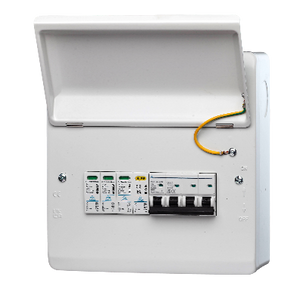
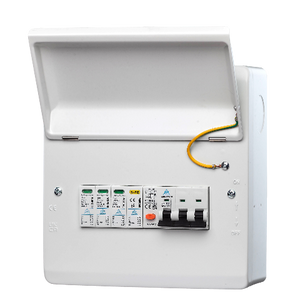
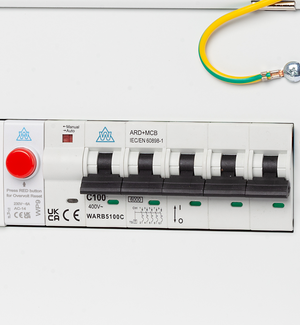
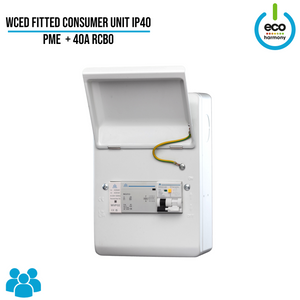
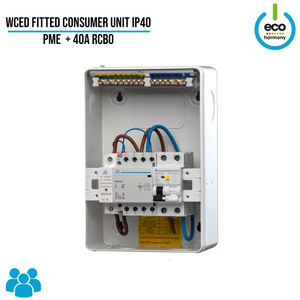
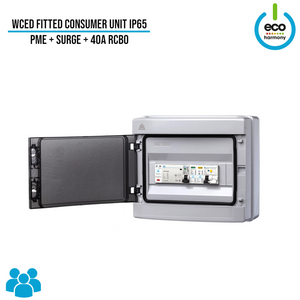
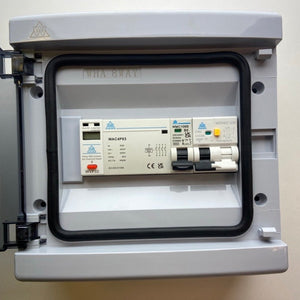
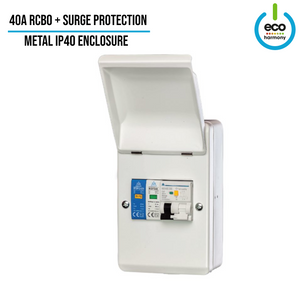
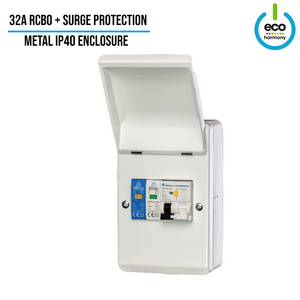
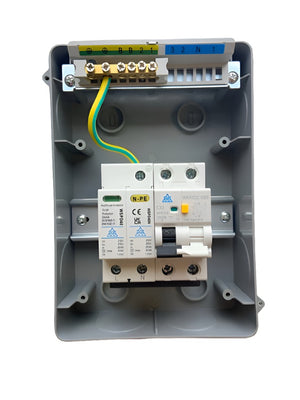
Modern units, like those in the Eco Harmony WCED range, combine PEN fault detection with Type 2 surge protection and RCBO overcurrent protection in a single enclosure, simplifying both the wiring and the certification process.
Why It Matters for Installers
Fitting the correct PME protection isn't just about passing inspection — though it does that too. It's about ensuring that your work holds up for the life of the installation. A PEN fault is a relatively rare event, but when it does happen, the protection device is all that stands between a safe disconnection and a serious incident.
Beyond safety, there are practical considerations: homeowners' EV-related insurance policies are increasingly scrutinising installation compliance. A correctly fitted PME device demonstrates that the installation meets the current edition of BS 7671.
Eco Harmony's PME Protection Range
At Eco Harmony, we supply PME protection devices for both single-phase and three-phase EV charger installations. Our WCED units are designed specifically for UK EV installs, with pre-assembled enclosures that reduce wiring time on site and come ready for inspection.
Whether you're fitting a single home charger or commissioning a multi-bay commercial setup, we have a solution that fits.
Explore PME Protection Devices →
Got a question about your specific install? Get in touch — we're happy to help you find the right product.
Frequently Asked Questions
What is PME protection?
PME (Protective Multiple Earthing) protection refers to devices that monitor and protect against PEN faults in a TN-C-S (PME) electrical supply. In a PME system, neutral and earth are combined in a single PEN conductor. If this conductor is broken, the earth at the property can rise to mains voltage — creating a serious shock risk, particularly for EV chargers whose cables connect directly to the vehicle chassis. A PME protection device monitors voltage continuously and disconnects the charger automatically if a fault is detected.
Why do EV chargers need PME protection in the UK?
Regulation 722.411.4.1 of BS 7671 (18th Edition, Amendment 2:2022) requires EV charge points on a PME supply to disconnect automatically in the event of a PEN fault. Without this protection, a lost neutral can raise the car chassis to 230V, posing a potentially fatal shock risk. Most UK domestic and commercial properties use a PME (TN-C-S) supply, so this requirement applies to the vast majority of EV charger installations.
Do I need to install an earth rod for an EV charger on a PME supply?
Not necessarily. BS 7671 offers two compliant options: converting to TT earthing using an earth rod, or fitting a dedicated PEN fault detection device upstream of the charger. Most UK installers use the second option — it's faster, cheaper, and avoids the need for groundworks. Eco Harmony's WCED PME protection devices are designed specifically for this purpose.
What is the difference between PME protection and surge protection for EV chargers?
PME (PEN fault) protection monitors the voltage between neutral and earth and disconnects the charger if the neutral is lost. Surge protection (SPD) guards against transient overvoltages caused by lightning or switching on the network. Both are required under BS 7671 Amendment 2:2022 for most EV charger installations. Eco Harmony's WCED units combine both functions in a single enclosure alongside RCBO overcurrent protection.
Which Eco Harmony products provide PME protection for EV chargers?
Eco Harmony's WCED range includes PME protection devices for both single-phase and three-phase EV charger installations. Units are available with or without integrated RCBO and surge protection, and in configurations supporting multiple charger circuits. All units are BS 7671 Amendment 2:2022 compliant and come pre-assembled for quick installation. Browse the full range here.