
Tesla Wall Connectors are among the most popular EV chargers in the UK, but most models don't include built-in PEN fault detection. This post explains exactly what that means for installers, what BS 7671 requires, and how to achieve full compliance with a dedicated PME protection unit.
Tesla Chargers Are Excellent — But They're Not the Full Story
Tesla Wall Connectors are well-engineered, reliable, and increasingly common on UK driveways. Gen 3 units include built-in DC leakage detection, which handles one part of the protection requirement for EV chargers.
What they don't include is PEN fault detection — the protection required under Regulation 722.411.4.1 of BS 7671 to guard against a lost neutral on a PME supply. That gap needs to be closed on every installation where the property is served by a TN-C-S (PME) system, which describes the majority of UK domestic and light commercial supplies.
Why PEN Fault Protection Is Non-Negotiable
In a PME system, the neutral and earth conductors are combined in a single PEN cable from the substation. If this conductor is broken — by a network fault, corrosion, or physical damage — the earth at the property is no longer correctly referenced. Instead, it can rise to 230V relative to true earth.
With an EV charger, the risk is compounded: the charging cable connects directly to the metal chassis of the car. During a PEN fault on an unprotected installation, anyone in contact with the vehicle while standing on ground could receive a potentially lethal electric shock.
This isn't a theoretical risk. BS 7671 Amendment 2:2022 requires automatic disconnection in the event of a PEN fault, and insurers are increasingly treating this as a compliance baseline for EV-related claims.
Your Two Options Under BS 7671
When installing any EV charger — including a Tesla Wall Connector — on a PME supply, you have two compliant routes:
- Convert to TT earthing by installing an earth electrode and separating the earthing system from the PME supply. This is effective but adds cost, time, and site-specific challenges.
- Fit a dedicated PEN fault detection device upstream of the charger. This is the preferred approach for most installers — it keeps the PME supply intact, is faster to install, and results in a clean, certifiable solution.
The Eco Harmony Solution for Tesla Installs
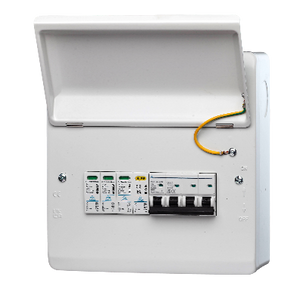
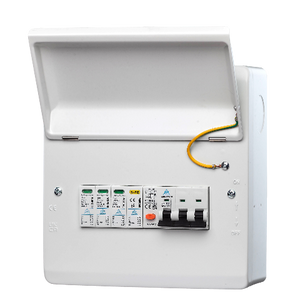
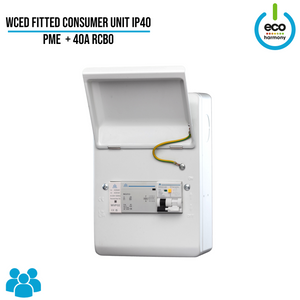
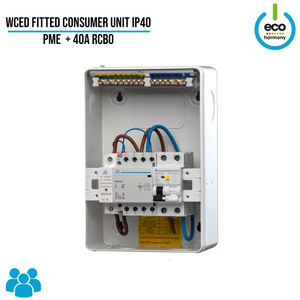
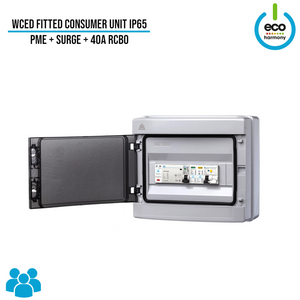
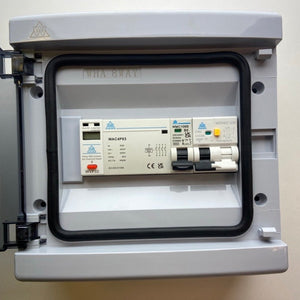
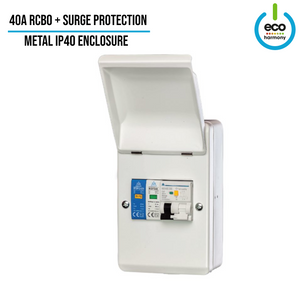
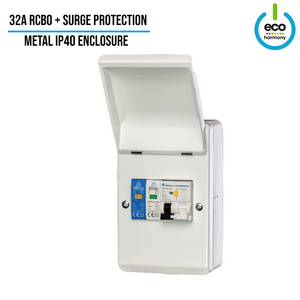
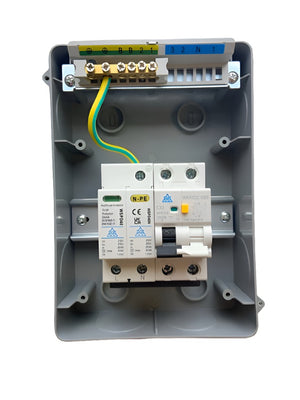
The Eco Harmony 3-Phase PME 40A RCBO + Surge Protection Unit is designed for exactly this use case. It combines everything needed for a compliant Tesla Wall Connector installation in a single, pre-assembled enclosure:
- PEN fault detection across all three phases
- 40A RCBO per charger circuit for overcurrent and residual current protection
- Type 2 surge protection (SPD) in line with BS 7671 Amendment 2 requirements
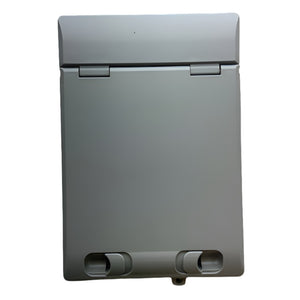
- Compact IP40 metal enclosure for clean wall mounting
Units are available in configurations supporting 2, 3, or 6 chargers, making them equally suitable for a single domestic install or a multi-bay residential or commercial setup.
PME protection for your install
Why Installers Choose This Approach
There are good practical reasons why an external PME protection unit is the default choice for most Tesla installs:
- No TT conversion required — you're working with the existing PME supply, which is simpler and cheaper.
- Pre-assembled and pre-tested — reduces wiring time on site and minimises the chance of installation error.
- Compatible with Tesla and virtually all other EV charger brands.
- Inspection-ready — units are BS 7671 A2:2022 compliant and straightforward to certify.
Pairing with a Distribution Board
For multi-charger setups — whether that's two Tesla units at home or a fleet installation — pairing the PME protection unit with a TPN Distribution Board + SPD gives you a complete, centralised solution. Purchasing the distribution board and MCBs together qualifies for 25% off the MCBs.
A Real-World Installation
A recent install involved three Tesla Gen 3 Wall Connectors on a commercial three-phase supply. The installer used an Eco Harmony 3-Phase PME Unit with three 40A RCBOs, with the integrated SPD providing surge protection for all three circuits. The installation passed NICEIC inspection without issue, with the PEN fault function verified on site. Total additional installation time for the PME unit: under an hour.
In Summary
Tesla Wall Connectors are a great product — but a great install requires more than the charger itself. On a PME supply, PEN fault protection is a regulatory requirement, not an optional extra. Fitting an Eco Harmony 3-Phase PME Unit with RCBO and SPD is the fastest, most cost-effective way to close that gap and deliver a fully compliant installation.
Explore Tesla-compatible PME protection →
Frequently Asked Questions
Does a Tesla Wall Connector need PME protection in the UK?
Yes. Tesla Wall Connectors (including Gen 3) include DC leakage detection, but do not include PEN fault detection. Regulation 722.411.4.1 of BS 7671 requires EV charge points on a PME supply to disconnect automatically in the event of a PEN fault. On a PME supply — which covers the majority of UK properties — a dedicated external PME protection device must be fitted upstream of the Tesla charger.
Does the Tesla Wall Connector Gen 3 have built-in PEN fault protection?
No. The Tesla Wall Connector Gen 3 includes DC leakage detection (6mA DC sensor), which meets part of the BS 7671 requirement for EV chargers. However, it does not include PEN fault detection. Installers must fit a separate PEN fault detection device upstream of the charger on any PME supply.
What PME protection unit is compatible with the Tesla Wall Connector?
The Eco Harmony 3-Phase PME 40A RCBO + Surge Protection Unit is designed for use with Tesla Wall Connectors and other EV chargers on three-phase PME supplies. It provides PEN fault detection across all three phases, 40A RCBO per charger circuit, and integrated Type 2 surge protection — all in a single IP40 metal enclosure. Units are available for 2, 3, or 6 charger circuits.
Can I install a Tesla Wall Connector without converting to TT earthing?
Yes. You do not need to convert to TT earthing if you fit a suitable PEN fault detection device upstream of the charger. Converting to TT is one compliant option under BS 7671, but fitting an external PME protection unit is faster, more cost-effective, and the preferred approach for most UK installers.
What is the difference between DC leakage detection and PEN fault protection?
DC leakage detection (a 6mA DC sensor) monitors for direct current leakage from the EV charger — a different fault condition to a PEN fault. PEN fault protection monitors the voltage between neutral and earth and disconnects if the neutral conductor is lost. Both are required under BS 7671 for EV charger installations; the Tesla Wall Connector provides the former but not the latter.