
What is PME in EV Charging?
What Is PME in EV Charging?
PME (Protective Multiple Earthing) is how most UK homes are earthed. It works well, but if the supply’s combined neutral-and-earth conductor breaks, a car on charge can become live. Here is what that means, what BS 7671 requires, and the three ways to comply.
UK technical guide · Updated September 2026
The short answer
PME is the UK’s TN-C-S supply arrangement: neutral and earth share one PEN conductor in the supplier’s network and are separated at your property. If that conductor fails (an open PEN fault), the earth at your property can rise towards mains voltage, and the metalwork of a vehicle on charge can become live. BS 7671 Regulation 722.411.4.1 restricts relying on a PME earth alone for EV charging outdoors, so the installation needs extra protection. There are three routes: a charger with built-in open-PEN protection, an external PEN fault detection unit, or a suitable earth electrode.
In plain English
Your home’s earth connection is shared with the electricity network. If that shared connection broke at the wrong moment while your car was charging, the car body could carry a dangerous voltage. A standard RCD can’t detect this.
The fix is simple: either the charger or a protection unit watches the supply and switches the charger off within moments of a fault. You don’t necessarily need to dig up the garden for an earth rod.
What PME means
PME stands for Protective Multiple Earthing. It describes how UK distribution network operators (DNOs) wire most domestic supplies. In the street cable, the neutral and the protective earth are combined into a single PEN conductor. At your property that conductor is split into a separate neutral and earth at the main earthing terminal, and from there your installation has separate conductors throughout.
PME is efficient and safe under normal conditions. Its weakness is that your earth depends on the integrity of the supplier’s PEN conductor.
| Supply type | How earth is provided | PEN fault risk | What it means for EV charging |
|---|---|---|---|
| TN-C-S (PME) | Neutral and earth combined in the network, split at your property | Yes | The most common UK supply. Needs PEN fault protection where a PME earth can’t be relied on alone. |
| TT | Your own earth electrode; no earth from the supplier | No shared PEN conductor | No PEN fault device needed, but the electrode and RCD protection must be adequate. |
| TN-S | Separate neutral and earth throughout, earth usually via the cable sheath | No | Standard earthing design applies. Mostly older urban areas. |
How to tell which you have
A PME (TN-C-S) supply has its earth terminal connected to the supplier’s cable rather than to a rod in the ground. A TT supply has an earth rod nearby. If you’re unsure, your installer can confirm with a supply test, or ask your DNO.
The PEN fault risk
Household circuits are affected by a PEN fault, but a car changes the picture. A charging cable connects the vehicle’s large metal body to your installation’s earth, and someone standing on the ground can touch it.
What happens in an open PEN fault
- The PEN conductor breaks somewhere between the substation and your property.
- Your earth loses its reference to true earth and can rise towards mains voltage.
- Anything bonded to that earth becomes hazardous to touch, including the charger casing and the vehicle body.
- Someone standing on the ground and touching the car can complete a circuit through their body, which can be fatal.
- A standard RCD can’t detect this. It only monitors current imbalance inside the circuit, and the fault is upstream.
What causes a PEN conductor to fail?
- Physical damage from excavation, road works or accidental cutting
- Corrosion, particularly in older or coastal areas
- Poor connections in cabinets, meter boxes or at the cut-out
- Overload or thermal damage to the conductor
- Surge damage from lightning or network switching
PEN faults are uncommon, but they give no visible warning. The supply carries on working normally, so only active monitoring can catch one before someone is harmed.
Technical: how the voltages behave
On a healthy TN-C-S supply the neutral sits close to earth potential. With an open PEN, load current tries to return through the earth path, so the neutral-to-earth voltage rises and the earth at the property rises with it.
PEN fault detection units monitor the supply voltage and disconnect when it leaves a safe window, typically ±10% of 230V (about 207V to 253V). Check the datasheet for the exact thresholds of the device you’re fitting.
What BS 7671 requires
Regulation 722.411.4.1 of BS 7671 (Section 722, electric vehicle charging installations) restricts the use of a PME earth as the only earth for an EV charge point. It is aimed at charge points and vehicles used outdoors, where someone can stand on true earth and touch the vehicle. Indoor garages carry a lower risk, but your installer should assess each site.
The regulation sets an outcome: the PEN fault risk has to be mitigated, and it lists the acceptable ways of doing it. It doesn’t say you must fit an earth rod, and it doesn’t say you must fit an external device. That is why the same job can be done three ways.
Edition and notification
Always work to the edition and amendment in force on the date of installation. EV charger installation is notifiable work under Part P of the Building Regulations in England and Wales, and should be carried out and certified by a competent electrician.
Your three options on a PME supply
| Option | How it works | Best when | Watch out for |
|---|---|---|---|
| 1. Charger with built-in open-PEN protection | The charger monitors the supply and disconnects itself if it detects a PEN fault. Simpson & Partners Home Series chargers work this way. | You’re choosing the charger for a new install and want the simplest wiring. | Check the manufacturer’s documentation confirms open PEN detection specifically. “RCD” or “earth fault” protection is not the same thing. |
| 2. External PEN fault detection unit | A voltage-monitoring unit fitted upstream of the charger disconnects it when the supply goes out of range. Many combine the PEN monitor with an RCBO and Type 2 surge protection. | The charger has no built-in protection, you’re retrofitting, you have several chargers, or the ground isn’t suitable for a rod. | Match the unit to single or three-phase, the number of charger circuits and the IP rating. Test it at commissioning, then at the intervals the manufacturer recommends. |
| 3. Supplementary earth electrode | A separate earth electrode is used to mitigate the effects of the PEN fault. The charge point circuit is typically run as TT, with its earth taken from the electrode and kept separate from the PME earth. | Soft ground is available near the charger and the required resistance can be achieved. | The regulation calls for a very low resistance, which can be hard to reach. It must be measured and recorded, and it involves groundworks. |
On a TT or TN-S supply
There is no shared PEN conductor, so you don’t need PEN fault protection. Standard RCD and earthing requirements still apply.
Choose your solution
Pick the card that matches the job. All units are UK-stocked and pre-assembled, so there is less wiring on site.
Simpson & Partners chargers
Built-in PME supply monitoring and automatic disconnection, so there is no separate PEN device to buy or wire.
PEN fault detection + surge protection
Weatherproof unit with a 40A RCBO and Type 2 surge protection, for external walls and exposed locations.
Fitted consumer unit, PME + 40A RCBO
For garages and internal installs. Surge protection, kWh meter and load balancing options are available.
Three-phase PEN fault protection
For 11 to 22kW chargers and commercial installs. Monitors all phases and the neutral. Choose the version that matches how much protection you want in the box.
TPN distribution boards with SPD
Centralised protection and distribution across multiple bays. Pair with a PME unit where the chargers have no built-in protection.
Already have a charger and want to add protection? A standalone PEN fault unit fits upstream without replacing the charger. For new installs, a unit that also includes the RCBO and surge protection means fewer components to wire and certify. Not sure which you need? Use the Product Finder, browse all PME protection, or ask us.
Installer guide
Choosing a PEN fault device
- Single or three-phase: match the unit to the supply. Three-phase needs monitoring across all phases.
- Number of charger circuits: multi-charger versions are available for commercial and fleet installs.
- RCBO or MCB: an RCBO gives residual current and overcurrent protection in one device. If the charger already has its own RCD protection, a unit with an MCB may be enough, but many installers standardise on RCBOs. See RCBO types explained.
- IP rating: IP40 is the minimum for indoor locations such as garages. Use IP65 or above outdoors or where exposed.
- Surge protection: BS 7671 requires you to assess the need for overvoltage protection, and most installers fit a Type 2 SPD as standard on EV circuits. See Do I need surge protection?
Install and commission
- Confirm the supply and the charger. Check the earthing arrangement, and whether the charger has built-in open-PEN protection.
- Mount the unit in a dry, accessible location with the right IP rating for the position.
- Wire it to the manufacturer’s instructions, with the protection upstream of the charger.
- Test the PEN fault function with a suitable simulator or the manufacturer’s test procedure. Methods vary between devices.
- Record the result on the Electrical Installation Certificate and notify the work as required.
PEN protection is not the same as an RCD or surge protection
| Device | Protects against | Detects a PEN fault? |
|---|---|---|
| PEN fault detection unit | Loss of the PEN conductor, by monitoring supply voltage | Yes |
| RCD or RCBO | Earth leakage and, for an RCBO, overcurrent. See Type B RCDs for DC leakage. | No |
| Surge protection (SPD) | Transient overvoltages from lightning or switching | No |
| RDC-DD | Smooth DC leakage from charger electronics | No |
Troubleshooting and maintenance
- Trips straight after installation: check the wiring against the manufacturer’s diagram. A miswired unit can trip unnecessarily or fail to detect a fault.
- Trips repeatedly in service: measure the incoming supply voltage over time and under load. A supply that regularly sits close to the unit’s disconnection thresholds will cause trips. Persistent problems can also point to a loose or damaged supply-side conductor, so involve the DNO if the supply is suspect. Never bypass or bridge out the device.
- Ongoing checks: follow the manufacturer’s inspection and test intervals, keep terminals tight and free from corrosion, and repeat the PEN fault function test after any significant work on the supply.
Example: a three-phase home
A homeowner on a three-phase PME supply wants an 11kW charger with no built-in open-PEN protection. The installer fits a 3-phase PME 40A RCBO + surge unit upstream of the charger. That gives PEN fault detection across all three phases, overcurrent and earth-leakage protection from the RCBO, and transient protection from the SPD in one enclosure. The installer tests the PEN function and records it on the certificate.
Frequently asked questions
What does PME stand for, and what does it mean in electrical terms?
Protective Multiple Earthing. It is the UK’s TN-C-S arrangement, where neutral and earth are combined in the supplier’s network and separated at your property.
Does every EV charger on a PME supply need PEN protection?
Regulation 722.411.4.1 restricts using a PME earth alone for charge points and vehicles used outdoors, so outdoor installs on a PME supply need one of the three routes above. Indoor installs carry a lower risk and your installer should assess them. TT and TN-S supplies don’t have the shared PEN conductor, so no PEN fault device is needed.
Do I need an earth rod?
Not necessarily. An earth electrode is one valid route, but the resistance the regulation calls for is very low and can be hard to achieve. A charger with built-in protection or an external PEN fault unit is usually simpler and doesn’t depend on ground conditions. See Do I need an earth rod for an EV charger?
Why can’t an RCD protect against a PEN fault?
An RCD detects current imbalance within the circuit. A PEN fault happens upstream and changes the earth’s potential without creating an imbalance the RCD can see. You need a device that monitors the supply voltage.
How do I know if my charger already has PEN protection?
Check the manufacturer’s installation manual for open PEN detection or PEN fault protection. Many modern chargers include it. “RCD protection” or “earth fault protection” is a different thing and doesn’t count.
Do Simpson & Partners chargers need a separate PEN device?
No. The Home Series has integrated PME supply monitoring and automatic disconnection, so no external PEN fault device is needed. Installers should still follow the manufacturer’s documentation and record the protection method on the certificate.
What voltage does a PEN fault device disconnect at?
Typically when the supply moves outside ±10% of nominal, roughly below 207V or above 253V. Check the datasheet for the device you’re fitting.
Can I add PEN protection to an existing charger?
Yes. An external PEN fault unit installs upstream of the charger without replacing it. It is one of the most common upgrade jobs.
How do I know if my home has a PME supply?
Most UK homes do. A PME supply takes its earth from the supplier’s cable rather than a local rod. Your installer can confirm with a supply test, or your DNO can confirm in writing.
Is PME safe for EV charging?
Yes, with the right protection in place. Most UK EV installs are on PME supplies. The risk is specific to an open PEN fault, which the routes above detect or mitigate.
Can one unit protect several chargers?
Multi-charger versions are available. For larger commercial or fleet sites, a TPN distribution board with SPD can be paired with a PME unit for centralised protection across bays.
What happens when a PEN fault device trips?
The device disconnects the supply to the charger and charging stops. Reset behaviour varies: some units reconnect automatically once the supply returns to normal, others need a manual reset, so check the datasheet. If a unit trips repeatedly, a qualified electrician should investigate the supply. Never bypass it.
Do I need a three-phase PEN fault device?
If the charger is three-phase, yes: use a unit that monitors all three phases and the neutral. A single-phase unit monitors line and neutral on a 230V supply. A correctly rated three-phase unit fitted upstream can protect several chargers on the same supply.
How do I test PEN fault detection after installation?
Use a PEN fault simulator or the manufacturer’s specified test procedure, then record the result on the Electrical Installation Certificate. Methods vary between devices, so repeat the test at the intervals the manufacturer recommends and after significant work on the supply.
What’s the difference between PEN protection and surge protection?
PEN protection disconnects the charger if the supply voltage goes out of range because the PEN conductor has failed. Surge protection guards against short transient overvoltages from lightning or switching. They protect against different risks, and many units combine both with an RCBO.
Glossary
- PME
- Protective Multiple Earthing, the UK’s TN-C-S arrangement. Neutral and earth are combined in the supplier’s network and separated at your property.
- TN-C-S
- Supply type where neutral and earth are combined (C) upstream and separated (S) at the installation. In UK domestic use it means the same as PME.
- PEN conductor
- The combined protective earth and neutral conductor in a PME network. Its open-circuit failure is the fault EV installations must guard against.
- Open PEN fault
- A break or high-resistance connection in the PEN conductor, which can raise the earth potential at the property.
- Reg 722.411.4.1
- The BS 7671 regulation that restricts using a PME earth alone for EV charging outdoors and sets out the acceptable protective measures.
- PEN fault unit
- A device that monitors the supply and disconnects the charger if the PEN conductor fails. Also sold as a PME protection unit or PME loss unit.
- DNO
- Distribution Network Operator, the company responsible for electricity distribution in your region.
- SPD
- Surge protection device, which guards against transient overvoltages.
- RDC-DD
- Residual direct current detecting device, which detects smooth DC leakage from charger electronics. A separate requirement from PEN fault protection.
Related guides
-
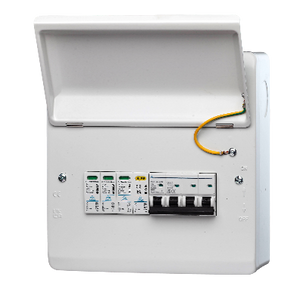

RCBO + Surge Protection – Fitted Consumer Unit IP40 – 3 Phase
Regular price From £65.00Regular price -

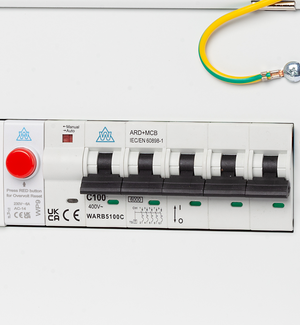
3-Phase PME PEN Fault Protection – 40A RCBO + Surge | Single EV Charger | BS7671 Compliant
Regular price From £65.00Regular price -
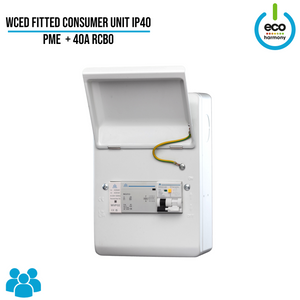

Fitted Consumer Unit IP40 – PME + 40A RCBO (Surge Protection + kWh Meter + Load Balancing Options Available)
Regular price From £80.00Regular price -
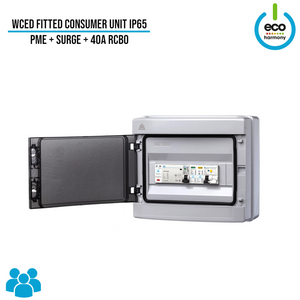

PEN Fault Detection + Surge Protection Device
Regular price From £77.50Regular price -
Save £2.50
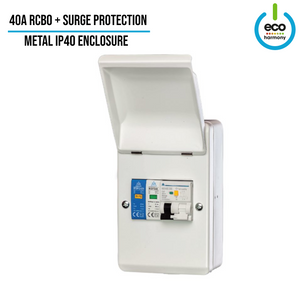

RCBO + Surge Protection Fitted Consumer Unit (IP30 / Indoor Use)
Regular price £32.50Regular price£35.00-£2.50 Sale price £32.50 -
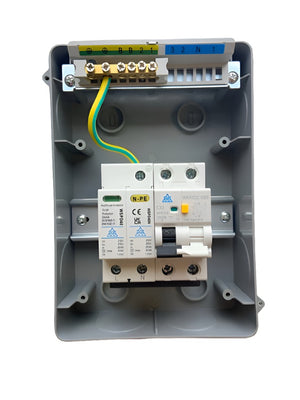

IP65 Consumer Unit with RCBO + Type 2 Surge Protection
Regular price £33.50Regular price£26.00Sale price £33.50


-


Simpson & Partners Cable Hook – Keep Your Charger Tidy & Stylish
Regular price £60.00Regular price -
Save £30.00


Home Series 7kW EV Charger – Type 2 Socket
Regular price From £550.00Regular price£580.00-£30.00 Sale price From £550.00 -


Home Series 7 kW Home EV Charger, Type 2 Tethered
Regular price From £620.00Regular price -


Free Colour Sample Card – Simpson & Partners EV Chargers
Regular price £0.00Regular price -
Sold out


Simpson & Partners Wireless Energy Manager – Smarter, Safer Charging
Regular price From £95.00Regular price


